Best Time To Visit Huacachina
Travelers researching Huacachina timing encounter wildly conflicting online advice, with some sources declaring it a "perfect year-round destination" while
Travelers researching Huacachina timing encounter wildly conflicting online advice, with some sources declaring it a “perfect year-round destination” while others warn “avoid December-February completely,” leaving reasonable people genuinely confused whether their specific travel dates will deliver spectacular desert sunsets or disappointing foggy evenings. The confusion stems from marketing language emphasizing eternal sunshine versus honest local experience acknowledging that coastal fog, occasional rain, and dramatic temperature swings create genuinely better and worse visiting windows.
In Brief: Choose the activity duration that fits your dates and check the actual schedule. No month or booking can guarantee sunset visibility.
Check Your Huacachina Buggy DateAt Huacachina Tours where we operate dune buggy departures daily across all twelve months watching weather patterns affect sunset tour quality and overall visitor satisfaction, we provide honest month-by-month assessment based on actual conditions. This guide covers dry season April-November delivering consistently excellent weather, peak season June-August combining perfect conditions with maximum crowds, shoulder months providing the sweet spot balancing weather with manageable tourist numbers, and summer December-March presenting genuine challenges that avoid-if-possible recommendations legitimately warn against.
GetYourGuideWhen Should You Visit Huacachina?
April through November dry season delivers consistently excellent Huacachina conditions with reliable clear skies for sunset tours, comfortable temperatures, and minimal rain, with May and September-October representing the absolute sweet spots combining peak weather quality with moderate crowds and better accommodation value than summer peak.
Best months: May, September, and October provide the ideal trifecta of excellent weather matching peak season quality, crowd levels 40-60% lower than June-August making tours and restaurants more relaxed, and accommodation rates 20-30% cheaper than summer highs while maintaining the dry season reliability that makes sunset dune buggy tours genuinely spectacular. These shoulder months deliver what most travelers actually want when they imagine Huacachina visits, balancing the dramatic clear desert sunsets that photos promise with the space to enjoy them without fighting tourist hordes for photo positions.
Peak season reality: June through August brings Peru’s winter delivering perfect desert conditions with crystal-clear skies, Fog conditions vary, and the year’s best sunset visibility, though Northern Hemisphere summer vacation timing creates maximum tourist concentrations filling hostels, packing tour groups to 14-16 people, and raising accommodation rates 20-30% above shoulder months. The weather genuinely justifies peak season designation with conditions marginally better than excellent shoulder months, though the crowd and cost premiums prove difficult justifying for budget-conscious travelers or those who value relaxed uncrowded experiences over absolutely optimal weather.
Weather vs crowds tradeoff: The unfortunate reality that Huacachina’s best weather months June-August coincide exactly with maximum tourist season means visitors must choose between absolutely perfect conditions with peak crowds and costs, or the 90-95% excellent shoulder month weather with substantially better value and atmosphere. Most independent travelers prioritize the shoulder month compromise once understanding that “slightly less perfect” weather still means clear dramatic sunsets and excellent sandboarding conditions without the congestion that peak season creates.
We’ve mapped out how to visit Huacachina tours based on what actually works – transport, timing, and which activities are worth booking in advance.
Practical recommendation: Target April-May or September-November shoulder windows when your Peru itinerary allows flexibility, as these months deliver 85-90% of peak season’s weather quality while providing 40-60% fewer crowds, easier accommodation booking, and the relaxed small-town atmosphere that Huacachina’s size suits better than packed peak conditions. Budget an extra day in case weather disappoints, though shoulder month reliability makes backup planning less critical than December-February visits requiring genuine contingency strategies.
If your dates are still flexible: travelers who haven’t locked in a fixed Peru itinerary can build that flexibility straight into transport. A Peru Hop (check prices here) pass is valid for a year and lets you change trips in the app up to 12 hours ahead, so a shoulder-month window can move a few days in either direction if a weather forecast or a fully booked hostel makes that worthwhile.
| Season | Months | Weather Quality | Crowds | Accommodation Cost | Sunset Tours | Overall Rating |
|---|---|---|---|---|---|---|
| Dry Season (Shoulder) | Apr-May, Sep-Nov | No verified reliability percentage | Moderate | Mid-range S/80-150 | Very reliable | 10/10 – Best value |
| Peak Season | Jun-Aug | Perfect 95%+ reliability | Very High | High S/120-180 | Consistently excellent | 8/10 – Crowds/costs |
| Wet/Summer Season | Dec-Mar | Variable 60-70% good days | Moderate-High (holidays) | Low-Mid S/60-120 | Fog ruins 30-40% | 4/10 – Weather unreliable |
| Transition | March, November | Good 75-80% reliability | Low-Moderate | Mid S/70-130 | Generally good | 7/10 – Acceptable |
Huacachina Weather Patterns And Seasons
Desert coastal climate: Huacachina occupies Peru’s coastal desert zone where the cold Humboldt Current offshore creates unusual conditions combining minimal rainfall typical of deserts with coastal fog influences more characteristic of marine environments, producing the specific weather patterns that make some months dramatically better for visiting than others. The climate classification proves genuinely unique worldwide with fewer than a dozen similar regions globally, creating weather behavior that travelers from temperate or tropical climates often struggle predicting accurately without local guidance.
Dry season (April-November): Eight-month window delivers the reliable weather that makes Huacachina tourism viable, with clear skies dominating 85-95% of days depending on specific month, minimal rain falling across entire period, and consistent temperatures creating the predictable conditions that sunset tour operators and visitors alike depend on for the dramatic desert experiences that marketing materials promise. The dry season reliability means travelers booking April-November dates can plan confidently around sunset tours, multi-day photography sessions, and extended desert activities without the weather contingency planning that December-March visits require.
Wet season (December-March): Summer months bring the genuinely problematic weather that honest avoid-if-possible recommendations warn against, with coastal fog called garúa reducing sunset visibility on 30-40% of December-February evenings, occasional rain showers disrupting tours and creating the wet sand conditions that kill sandboarding speed, and extreme afternoon heat reaching 32-35°C (90-95°F) making midday activities genuinely uncomfortable. The wet season designation proves somewhat misleading as rainfall remains minimal compared to tropical regions, though the fog and heat combination creates conditions substantially inferior to dry season reliability.
Temperature ranges: Summer December-March sees daytime highs of 28-35°C (82-95°F) with warm evenings staying 20-25°C (68-77°F) creating the heat that makes afternoon tours exhausting though evening departures tolerable. Winter June-August brings pleasant 18-23°C (64-73°F) days perfect for physical activity followed by genuinely cold 8-12°C (46-54°F) nights requiring actual jackets that summer visitors never need. Shoulder months April-May and September-November provide the temperature sweet spot of 22-28°C (72-82°F) days and 14-18°C (57-64°F) evenings that most travelers find ideal for both daytime oasis relaxation and evening dune activities.
GetYourGuideRainfall reality: Huacachina receives only 2-5mm total annual precipitation making it one of Earth’s driest inhabited locations, with the “wet season” December-March accounting for perhaps 80% of this minimal total through occasional brief showers rather than extended rainy periods. The rare rain events lasting 30-60 minutes prove more disruptive than the limited precipitation suggests because they transform sand consistency from fast-sliding surface to sticky mass ruining sandboarding for 2-3 days afterward, with operators sometimes canceling tours following rain specifically because the poor conditions create negative experiences.
| Month | High/Low Temp | Rainfall | Fog Risk | Sky Clarity | Overall Conditions |
|---|---|---|---|---|---|
| January | 32°C/20°C (90/68°F) | Low 1-2mm | High 40% | Fair-Good | 5/10 – Hot, fog |
| February | 33°C/21°C (91/70°F) | Low 1-2mm | High 35% | Fair-Good | 5/10 – Hot, fog |
| March | 32°C/20°C (90/68°F) | Minimal | Moderate 20% | Good | 7/10 – Improving |
| April | 28°C/17°C (82/63°F) | Minimal | Low 10% | Excellent | 9/10 |
| May | 24°C/14°C (75/57°F) | Minimal | Very Low 5% | Excellent | 10/10 |
| June | 22°C/12°C (72/54°F) | None | None | Perfect | 10/10 |
| July | 21°C/11°C (70/52°F) | None | None | Perfect | 10/10 |
| August | 22°C/11°C (72/52°F) | None | None | Perfect | 10/10 |
| September | 23°C/13°C (73/55°F) | None | Very Low 5% | Excellent | 10/10 |
| October | 25°C/15°C (77/59°F) | None | Low 5% | Excellent | 10/10 |
| November | 27°C/17°C (81/63°F) | Minimal | Low 10% | Very Good | 9/10 |
| December | 30°C/19°C (86/66°F) | Low 1mm | Moderate 25% | Good | 6/10 – Warming, fog returns |
Dry Season (April-November) – The Optimal Window
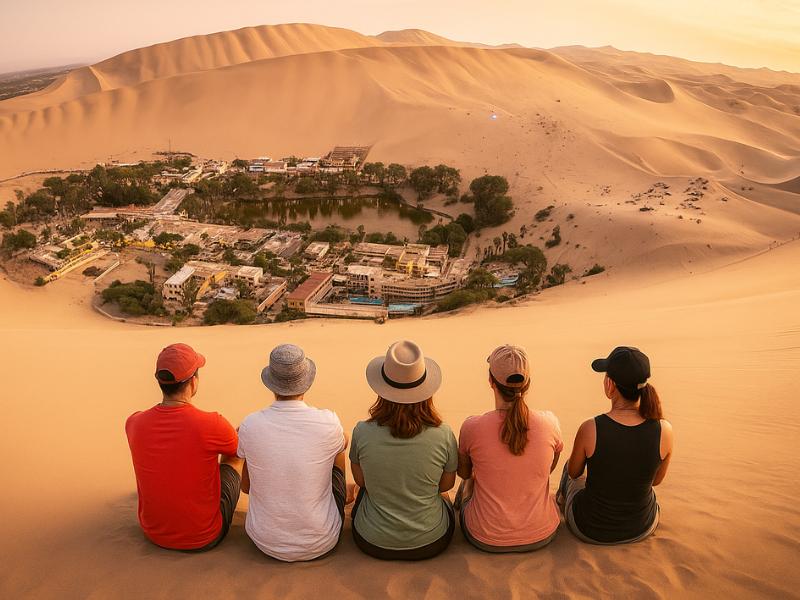
Why it’s best: Eight continuous months of minimal rainfall, consistently clear skies, and reliable sunset visibility create the predictable excellent conditions that make Huacachina tourism genuinely rewarding rather than weather-dependent gamble, with sunset dune buggy tours delivering the dramatic golden-hour lighting and crystal-clear desert visibility that Instagram photos and travel blogs showcase. The dry season reliability means visitors can book single-night stays confidently knowing their one sunset tour opportunity will almost certainly deliver rather than the multiple-night insurance policies that December-February weather unreliability forces cautious travelers adopting. Comfortable temperatures throughout the period eliminate both the exhausting heat characterizing summer afternoons and the need for extensive cold-weather gear that destinations at higher elevations require.
April-May: Shoulder months warming after winter cold bring pleasant 24-28°C (75-82°F) days perfect for afternoon dune activities, fewer crowds than summer peak with hostels running 50-60% occupancy versus July-August’s full bookings, and excellent accommodation value with rates 25-35% below peak season while weather quality matches June-August reliability closely. May specifically represents perhaps the single best Huacachina month combining perfect conditions with the lowest crowds dry season offers, with tour groups averaging 8-10 participants versus peak season’s 14-16 creating genuinely more personalized experiences. The April-May window works particularly well for Peru itineraries prioritizing Cusco/Machu Picchu during their optimal May-September dry season, allowing Huacachina visits before or after highland portions without weather compromise.
June-August: Peak winter season delivers absolutely perfect desert conditions with crystal-clear skies virtually guaranteed, zero coastal fog interference, and the year’s coldest nights of 8-12°C (46-54°F) creating dramatic temperature swings that pure desert climates produce but coastal influences moderate during other months. Northern Hemisphere summer vacation timing brings maximum international tourism filling all accommodation tiers, packing sunset tours to capacity, and creating the bustling atmosphere that some travelers enjoy while others find overwhelming in Huacachina’s genuinely tiny town. Cold evening temperatures catch unprepared visitors off guard requiring actual warm layers for post-sunset buggy rides, though daytime conditions of 20-23°C (68-73°F) prove ideal for physical sandboarding activity.
September-November: Post-peak shoulder window maintains dry season weather reliability while crowds decline progressively through autumn, with September showing weather quality essentially matching August while accommodation availability improves dramatically as peak season ends. October represents the temperature sweet spot with warm 25°C (77°F) days, mild 15°C (59°F) evenings, and the moderate conditions most travelers find ideal for both relaxation and adventure activities. November begins the gradual transition toward summer with warming temperatures and slightly increased fog probability around 10% though conditions remain substantially better than December-February will bring, making it acceptable month for visitors whose schedules don’t accommodate earlier timing.
GetYourGuideSunset tour quality: Dry season delivers the consistently spectacular sunset experiences that justify Huacachina’s fame, with clear skies creating unobstructed golden-hour lighting, minimal atmospheric haze enabling the dramatic color saturation that makes desert sunsets photographically impressive, and reliable visibility ensuring the high dune viewpoint moments actually showcase the advertised panoramas rather than disappointing fog-obscured nothingness. The 90-95% excellent sunset probability during April-November means single-night visitors can reasonably expect their one tour delivering the experience they traveled specifically to capture, unlike December-February’s 60-70% success rate requiring multi-night insurance strategies or acceptance that weather might disappoint entirely.
We’ve broken down sandboarding vs dune buggy in Huacachina tours so you can figure out which suits your group – or whether you should just do both.
| Month | Avg Temp Day/Night | Crowds | Accommodation | Sunset Quality | Sandboarding Conditions | Overall Rating |
|---|---|---|---|---|---|---|
| April | 28°C/17°C (82/63°F) | Low-Moderate | S/80-120 | Excellent 90% | Excellent | 9/10 |
| May | 24°C/14°C (75/57°F) | Low | S/70-110 | Excellent 95% | Excellent | 10/10 – Best month |
| June | 22°C/12°C (72/54°F) | High | S/120-180 | Perfect 98% | Perfect | 9/10 – Crowds |
| July | 21°C/11°C (70/52°F) | Very High | S/130-200 | Perfect 98% | Perfect | 8/10 – Peak crowds |
| August | 22°C/11°C (72/52°F) | Very High | S/130-200 | Perfect 98% | Perfect | 8/10 – Peak crowds |
| September | 23°C/13°C (73/55°F) | Moderate | S/90-140 | Excellent 95% | Excellent | 10/10 – Sweet spot |
| October | 25°C/15°C (77/59°F) | Moderate | S/90-140 | Excellent 95% | Excellent | 10/10 – Sweet spot |
| November | 27°C/17°C (81/63°F) | Moderate | S/100-150 | Very Good 85% | Very Good | 9/10 |
Peak Season (June-August) – Best Weather, Most Crowds
Why it’s peak: Northern Hemisphere summer vacation timing from June through August coincides exactly with Peru’s winter months delivering Huacachina’s absolute best weather conditions, creating the perfect storm of maximum international tourist availability meeting optimal desert climate that fills every hostel bed and tour slot. The dual factor combination proves unavoidable with families, students, and workers from North America, Europe, and Asia all traveling during identical months when their home countries offer summer break, while Peru’s coastal desert experiences its clearest driest coldest period producing the crystal skies that dramatic sunset photography requires. Marketing materials showcasing spectacular Huacachina sunsets almost invariably use June-August photos specifically because these months deliver the reliably perfect conditions that shoulder months match 85-90% but not quite 100% of the time.
Crowd reality: Hostels and hotels reach full capacity requiring 2-4 week advance bookings during July-August versus shoulder month walk-in availability, with popular properties selling out entirely for weekends and the July 28-29 Independence Day period booking solid 2-3 months ahead. Sunset dune buggy tours run at maximum 14-16 person capacity creating crowded buggy rides and congested photo stops where finding clear frame compositions requires patience and timing, versus shoulder month 8-12 person groups providing substantially more personal space and guide attention. The lagoon-front restaurants show wait times during 7-9pm dinner hours that never occur during quieter months, while the oasis pathways feel genuinely crowded with the constant tourist traffic that Huacachina’s tiny size amplifies into bottleneck congestion.
Weather advantages: Crystal clear skies dominate 95-98% of June-August days with essentially zero cloud cover creating the unobstructed sunset views that make tour investments worthwhile, zero coastal fog interference eliminating the visibility reduction ruining 30-40% of summer December-February evenings, and virtually no rain chance allowing confident single-night visit planning without weather backup strategies. The atmospheric clarity during peak winter months creates visibility extending 50-60 kilometers enabling the distant Andes mountain views and vast desert panoramas that hazier months reduce to 30-40 kilometer ranges, with the difference proving photographically significant for serious landscape shooters prioritizing maximum clarity. Night sky visibility reaches annual peak during June-August cold clear nights, with star photography and Milky Way observation benefiting from the zero humidity and minimal light pollution that Huacachina’s isolated location provides.
Temperature ideal: Daytime highs of 20-23°C (68-73°F) create the comfortable conditions perfect for physically demanding sandboarding and dune hiking without the exhausting heat characterizing summer months, while nighttime lows of 10-12°C (50-54°F) require warm layers that surprise visitors expecting desert heat persistence through evening hours. The moderate daytime temperatures prove ideal for the 2-3 hour afternoon sunset tours involving buggy riding, uphill hiking carrying boards, and extended sun exposure that would exhaust participants during December-February’s 32-35°C (90-95°F) heat. Cold nights create dramatic temperature swings of 10-13°C (18-23°F) between afternoon peak and pre-dawn minimum, producing the pure desert climate experience that coastal fog moderates during other months.
Cost premium: Accommodation rates increase 20-30% above shoulder month pricing with budget hostels charging S/50-70 versus April-May’s S/40-55, mid-range hotels reaching S/150-200 versus S/100-140, and the cost premium applying universally across all property tiers responding to peak demand. Tour prices remain relatively stable year-round at S/35-50 for standard sunset departures as operators add additional buggy runs rather than raising per-person costs, though the full group sizes mean less personalized attention and longer waits at each sandboarding stop. The accommodation premium proves difficult avoiding as even budget travelers seeking dorm beds face higher rates, with the only cost mitigation strategy involving booking 3-4 weeks ahead securing lower early-bird rates versus last-minute desperation pricing when availability shrinks.
German couple visited Huacachina twice accidentally, first in May finding relaxed 10-person sunset tours with easy photo access and S/90 comfortable hotel rooms booked day-of-arrival, returning in July encountering 16-person packed tours requiring aggressive positioning for sunset shots and S/150 for identical hotel rooms requiring 2-week advance reservation, later telling us “the May visit felt like discovering hidden gem while July felt like we were sharing it with everyone else who’d read the same guidebook.”
Shoulder Season (April-May, September-November) – The Sweet Spot
Why it’s ideal: Shoulder months deliver 85-90% of peak season’s weather quality while providing 40-60% fewer crowds, 20-30% lower accommodation costs, easier same-week booking versus peak’s advance planning requirements, and the relaxed small-town atmosphere that Huacachina’s genuine size suits better than packed conditions transform it into. The slight weather reliability reduction from peak season’s 95-98% excellent conditions to shoulder’s 85-90% proves acceptable for most visitors once understanding that “slightly less reliable” still means clear dramatic sunsets and excellent sandboarding on vast majority of days. Independent travelers and budget-conscious visitors particularly benefit from shoulder timing as the cost savings across accommodation and the improved tour experience from smaller groups outweigh the marginal weather quality difference that only perfectionists and professional photographers genuinely require.
April-May advantages: Warming temperatures transitioning from winter cold bring pleasant 24-28°C (75-82°F) days perfect for afternoon physical activity without exhausting heat, with May specifically representing perhaps Huacachina’s single best month combining excellent weather with the year’s lowest international tourist numbers. Occasional wildflowers appear on dune edges during April-May following the minimal winter moisture, creating brief color splashes that desert photography enthusiasts specifically seek though casual visitors often miss entirely given the subtle small-scale appearance. Manageable crowd levels mean hostels run 50-60% occupancy enabling walk-in bookings and last-minute plan changes impossible during peak months, while tour groups average 8-10 participants creating genuinely more personalized experiences with better guide interaction and easier photo access at popular viewpoints.
GetYourGuideSeptember-November advantages: Warm comfortable temperatures of 23-27°C (73-81°F) maintain summer-like conditions without the extreme heat and fog that actual summer December-February brings, with September weather matching August quality so closely that casual visitors notice essentially zero difference while enjoying substantially reduced crowds. Post-peak accommodation pricing drops 20-30% below July-August rates as properties compete for the reduced tourist volume, creating excellent value opportunities for budget travelers who timed specifically around the shoulder window. Fewer tourists mean the oasis lagoon, restaurants, and dune peaks feel genuinely uncrowded with the peaceful atmosphere that marketing photos suggest but peak season crowds eliminate, with September-October particularly delivering the small-town charm that draws visitors to Huacachina initially.
Tour group sizes: Shoulder month departures typically run 8-12 participants versus peak season’s consistent 14-16 capacity groups, creating meaningful differences in personal space during buggy rides, time spent waiting for group rotation at sandboarding stops, and guide availability for individual questions and technique feedback. The smaller groups mean each participant gets 4-6 runs versus peak season’s rushed 3-4 attempts, with the additional practice time proving particularly valuable for standing sandboarding where the learning curve requires multiple attempts. Guides can provide actual personalized instruction to 10-person groups versus the basic safety briefing being all they manage with 16-person crowds, with the difference affecting beginner success rates and overall tour satisfaction measurably.
Weather reliability: Shoulder months deliver excellent conditions on 85-90% of days versus peak season’s 95-98%, with the 5-10% reliability reduction representing occasional cloud interest adding drama to sunsets or very rare light fog reducing visibility slightly rather than the consistent fog ruining December-February tours. Most shoulder month visits encounter perfect weather indistinguishable from peak conditions, with the statistical reliability difference proving more relevant for professional photography expeditions requiring guaranteed conditions than casual tourism where 85-90% odds represent perfectly acceptable risk. The practical implication means booking 1-2 nights provides insurance against the 10-15% chance of suboptimal weather affecting single-night visits, though many shoulder visitors successfully execute one-night stays encountering excellent conditions.
| Factor | Peak Season (Jun-Aug) | Shoulder Season (Apr-May, Sep-Nov) |
|---|---|---|
| Weather Quality | No verified reliability percentage | No verified reliability percentage |
| Daytime Temperature | 20-23°C (68-73°F) | 24-28°C (75-82°F) |
| Crowds | Very High | Low-Moderate |
| Accommodation Cost | S/120-200 mid-range | S/90-140 mid-range (25-30% less) |
| Booking Required | 2-4 weeks ahead | 3-7 days ahead, walk-ins possible |
| Tour Group Size | 14-16 typical | 8-12 typical |
| Restaurant Waits | Common dinner hours | Rare |
| Overall Value | 7/10 – Perfect weather, high costs | 10/10 – Best balance |
| Sunset Tour Quality | Weather dependent | 9/10 very reliable |
| Who It Suits | Weather perfectionists, inflexible schedules | Most travelers, budget-conscious, value quality experience |
Summer/Wet Season (December-March) – When To Avoid
Honest assessment: December through March represents Huacachina’s worst weather window with coastal fog reducing sunset visibility unpredictably, extreme afternoon heat making midday activities genuinely uncomfortable, occasional rain disrupting tours entirely, and the combination of unreliable conditions creating the avoid-if-schedule-flexible recommendation that honest local guides provide despite marketing pressure emphasizing year-round accessibility. The summer months deliver acceptable experiences perhaps 60-70% of the time with clear sunsets, manageable heat, and dry sand, though the 30-40% disappointment rate proves substantially higher than dry season’s 5-10% creating genuine planning risk that cautious travelers reasonably want avoiding. Budget travelers sometimes justify summer visits through the 30-40% lower accommodation costs versus peak season, though the weather disappointment frequently makes the savings feel like poor value when sunset tours deliver fog-obscured nothingness instead of dramatic desert views.
Coastal fog (garúa): The cold Humboldt Current offshore creates fog banks that roll inland during December-February affecting coastal Peru extensively, with Huacachina sitting close enough to the coast that fog penetration reaches the oasis on 30-40% of summer evenings reducing sunset visibility from spectacular to disappointing or completely obscured. The fog proves genuinely unpredictable with forecasting essentially impossible beyond same-day morning assessment, creating frustrating uncertainty where travelers cannot know whether their specific sunset tour will deliver clear conditions or fog disappointment until arriving at the dune peak. The garúa typically burns off by mid-morning making sunrise tours slightly more reliable than sunset alternatives during summer months, though the predawn 5am departures eliminate most casual participants unwilling accepting the wake-up requirement.
Heat reality: Afternoon temperatures reaching 30-35°C (86-95°F) during January-February create genuinely exhausting conditions for the physical exertion that dune buggy tours require, with the combination of direct sun, reflective sand doubling radiation exposure, uphill hiking carrying boards, and lack of shade producing heat stress that affects participants more severely than anticipated. The extreme heat concentrates during 12-4pm hours making sunset tour timing around 4-5pm departures provide some relief as temperatures begin dropping, though even late afternoon conditions remain uncomfortably hot compared to dry season’s moderate climate. Evening tours cool to pleasant 22-25°C (72-77°F) by sunset creating the paradox where optimal comfort timing coincides with fog probability peak, forcing tradeoff between heat avoidance and visibility optimization that dry season eliminates entirely.
GetYourGuideRain possibility: Occasional summer showers occurring 3-5 times across December-March season prove more disruptive than the limited 2-5mm annual precipitation suggests, with even 20-30 minute rain events transforming sand consistency from fast-sliding surface to sticky mass that kills sandboarding speed for 2-3 days afterward. Operators sometimes cancel tours immediately following rain specifically because the poor wet-sand conditions create negative experiences generating bad reviews and dissatisfied customers, with the 2-3 day recovery period meaning single rain event affects multiple subsequent tour days. The rain timing proves completely unpredictable beyond general summer season elevated probability, creating additional uncertainty that compounds with fog unpredictability to make December-February genuinely problematic for visitors wanting reliable positive experiences.
| Month | Fog Risk | Heat Level | Rain Chance | Crowds | Value Rating |
|---|---|---|---|---|---|
| December | Moderate 25% | High 30-32°C (86-90°F) | Low 5% | Moderate-High (holidays) | 5/10 |
| January | High 40% | Very High 32-35°C (90-95°F) | Moderate 10-15% | Moderate | 4/10 – Worst month |
| February | High 35% | Very High 31-34°C (88-93°F) | Moderate 10-15% | Low | 4/10 |
| March | Moderate 20% | High 30-32°C (86-90°F) | Low 5% | Low-Moderate | 6/10 – Improving |
Special Events And Holidays Affecting Timing
Peruvian Independence Day (July 28-29): Peru’s national holiday creates the single busiest domestic tourism period of the entire year with Lima residents flooding coastal destinations including Huacachina during the extended 4-5 day weekend, requiring accommodation bookings 2-3 months in advance as every hostel and hotel reaches full capacity. The crowds during Independence week exceed even regular peak season July-August levels with tour groups running at absolute maximum capacity, restaurants showing hour-long waits, and the tiny oasis feeling genuinely overwhelmed by visitor numbers that double or triple normal occupancy. Prices spike 40-50% above standard peak rates with properties implementing minimum 3-night stay requirements and refusing discounts, making Independence week the year’s worst value proposition combining highest costs with most crowded conditions despite excellent July weather.
Christmas-New Year (December 20-January 5): The absolute worst Huacachina timing combining summer season’s problematic weather with holiday peak crowds and maximum accommodation pricing, creating the perfect storm of fog-ruined sunsets, extreme heat, packed tours, and inflated rates that smart travelers avoid entirely when schedule permits. International tourists from Northern Hemisphere seeking warm Christmas destinations combine with Peruvian domestic travelers during summer school holidays to fill accommodation despite the objectively poor weather conditions, with many visitors disappointed by the fog and heat after booking based on marketing photos taken during optimal dry season months. The 2-week period requires advance booking despite suboptimal conditions as scarcity drives pricing rather than value, with budget travelers particularly poorly served by the combination of high costs and weather disappointment.
Easter week: Semana Santa brings moderate domestic tourism increase as Peruvian families take Easter holiday trips, creating manageable crowd bump rather than the overwhelming surge characterizing Independence Day or Christmas periods. The Easter timing varies annually between late March and late April affecting whether visitors encounter tail-end summer weather or early shoulder season conditions, with April Easter weeks proving substantially better than March alternatives that still show summer fog risk. Advance booking 2-3 weeks ahead proves sufficient for most properties during Easter versus Independence Day’s months-ahead requirement, with the crowd increase creating busy but not overwhelming conditions that most visitors accommodate without significant disruption.
Inti Raymi (June 24): Cusco’s massive Inca festival creates broader Peru tourism surge affecting Lima and connecting destinations as visitors route through the country accessing Cusco celebrations, though Huacachina impact remains minimal compared to the genuine overcrowding affecting highland cities. Some visitors incorporate brief Huacachina stops into Cusco-focused itineraries during late June creating slight uptick in international tourism, though the effect proves far less dramatic than Independence Day domestic surge. The June 24 date falls during peak season when Huacachina already runs busy making the incremental Inti Raymi impact difficult distinguishing from baseline summer crowds.
School holidays: Peruvian summer vacation December-March brings sustained elevated domestic tourism particularly during January-February when Lima families escape coastal fog seeking desert sunshine, though many discover Huacachina experiences identical fog problems. Winter school break July brings the second annual domestic surge coinciding with international peak season to create the year’s highest sustained crowd levels, with the entire month showing consistently full accommodation and maximum tour capacity. The school holiday patterns create predictable crowd timing that advance planners work around rather than booking directly into the busiest weeks when alternatives exist.
Wondering if the dunes are suitable for children? Check out our guide on visiting Huacachina tours with kids – some activities are great for families and others need a second thought.
| Holiday Period | Dates | Crowd Impact | Booking Urgency | Weather Quality | Recommendation |
|---|---|---|---|---|---|
| Independence Day | July 28-29 (extended weekend) | Extreme – Worst of year | 2-3 months ahead essential | Excellent | Avoid entirely if possible |
| Christmas-New Year | Dec 20-Jan 5 | Very High | 1-2 months ahead | Poor – fog/heat | Avoid – worst weather + crowds |
| Easter Week | Late Mar-Late Apr (varies) | Moderate | 2-3 weeks ahead | Variable by timing | Acceptable with planning |
| Inti Raymi | June 24 | Low-Moderate | 1-2 weeks ahead | Excellent | Minor impact |
| July School Break | All July | High (peak season) | 2-4 weeks ahead | Excellent | Excellent weather, expect crowds |
| Summer School Break | Jan-Feb | Moderate-High | 1-2 weeks ahead | Poor | Busy despite bad weather |
FAQ: Huacachina Timing Questions
1. What is the best month to visit Huacachina?
May represents the single optimal month combining excellent dry season weather matching peak season quality, the year’s lowest international tourist numbers, comfortable 24°C (75°F) temperatures, and mid-range accommodation pricing. September and October tie for second-best delivering similar weather with slightly more crowds than May though still well below peak summer levels.
2. When should I avoid visiting Huacachina?
December through February summer months prove most problematic with coastal fog ruining 30-40% of sunsets, extreme 32-35°C (90-95°F) heat, and occasional rain creating genuinely unreliable conditions. Independence Day weekend July 28-29 combines perfect weather with overwhelming crowds and maximum prices making it the specific dates to avoid most strongly.
3. Is Huacachina worth visiting in summer (December-February)?
Worthwhile only if schedule absolutely prevents dry season timing, with realistic expectations accepting 30-40% chance of fog-disappointing sunsets and uncomfortable afternoon heat. Budget the lowest accommodation rates of the year and book multiple nights providing insurance against weather ruining single sunset tour opportunity.
4. How crowded is Huacachina in July and August?
Very crowded with hostels at full capacity, tours running maximum 14-16 person groups, and restaurants showing dinner waits, requiring 2-4 week advance accommodation booking. Independence Day weekend July 28-29 shows extreme crowds doubling normal peak levels with 2-3 month advance booking essential.
5. Can you visit Huacachina year-round?
Technically yes with tours operating all twelve months, though December-February summer delivers unreliable weather making dry season April-November strongly preferable when schedule allows. Year-round accessibility means last-minute visits remain possible though weather quality varies dramatically by timing.
6. What’s the weather like in Huacachina in May?
Excellent with 24°C (75°F) comfortable days, 14°C (57°F) mild evenings, Sunset visibility varies, Fog conditions vary, and minimal rain creating conditions matching peak June-August quality. May represents the temperature sweet spot warmer than winter cold though without summer extremes.
7. When is the cheapest time to visit Huacachina?
January-February shows lowest accommodation rates 30-40% below peak season as properties discount during worst weather period, though the fog and heat frequently make savings feel like poor value. Shoulder months April-May and September-November provide better value proposition combining good weather with 20-30% discounts versus peak.
Glossary: Huacachina Seasonal Terms
Dry Season / Wet Season: Dry season April-November delivers eight months of reliable clear weather with minimal rain and consistent conditions, while wet season December-March brings coastal fog, occasional showers, and extreme heat creating the problematic conditions that avoid-if-possible recommendations warn against. The “wet” designation proves somewhat misleading as annual rainfall remains minimal, though fog and heat combination creates genuinely inferior visiting conditions.
Coastal Fog (Garúa): Dense fog created by cold Humboldt Current offshore rolling inland during December-February summer months, reducing sunset visibility on 30-40% of evenings and transforming potentially spectacular tours into disappointing fog-obscured experiences. Garúa proves completely unpredictable beyond general summer season elevated probability, creating planning uncertainty that dry season’s reliable clarity eliminates.
Peak Season / Shoulder Season: Peak season June-August combines Peru’s winter delivering perfect desert weather with Northern Hemisphere summer vacation creating maximum international tourism, while shoulder season April-May and September-November provides 85-90% of peak’s weather quality with 40-60% fewer crowds and 20-30% lower costs. The shoulder timing represents optimal value balancing excellent conditions with manageable tourist numbers.
Desert Coastal Climate: Unusual climate classification combining desert’s minimal rainfall with coastal influences creating fog patterns, characterized by dramatic day-night temperature swings, virtually zero annual precipitation, and the specific weather behaviors making some months dramatically better for visiting than others. Fewer than dozen similar climate regions exist globally making Huacachina’s weather genuinely unique worldwide.
Peruvian Summer/Winter: Seasons reverse from Northern Hemisphere with Peruvian summer December-March bringing heat and problematic weather, while Peruvian winter June-August delivers cool comfortable conditions and perfect desert clarity. The reversal confuses Northern Hemisphere travelers expecting summer meaning good weather when Peru’s summer actually represents worst Huacachina visiting window.
Sunset Tour Season: While tours operate year-round, dry season April-November represents the reliable sunset tour period delivering 85-95% excellent visibility versus summer’s 60-70% success rate. Peak sunset quality occurs June-August when crystal-clear conditions virtually guarantee dramatic golden-hour lighting that makes dune buggy tours photographically worthwhile.
Independence Day Peak: July 28-29 Peruvian national holiday creating the year’s single busiest domestic tourism period, requiring 2-3 month advance accommodation booking and creating crowd levels exceeding even regular peak season. The extended holiday weekend combines perfect July weather with overwhelming visitor numbers making it the specific dates timing-flexible travelers avoid most emphatically.
Ready To Choose Your Huacachina Travel Dates?
April through November dry season delivers consistently excellent Huacachina conditions with May and September-October shoulder months representing the absolute sweet spots combining peak weather quality with moderate crowds and strong value, making these months the target windows when Peru itinerary flexibility permits timing selection. The eight-month optimal window proves generous enough that most visitors can align Huacachina visits with dry season reliability, avoiding the December-February summer weather problems that genuinely diminish experience quality beyond mere marketing exaggeration.
Timing genuinely affects Huacachina experience quality substantially with the difference between May’s clear reliable sunsets and January’s fog-disappointing tours proving dramatic enough that schedule-flexible travelers should prioritize dry season visits over summer alternatives regardless of slight cost premiums. The small desert oasis reveals its best personality during uncrowded shoulder months when the peaceful atmosphere, manageable tour groups, and available accommodation create the experience marketing photos suggest, while peak summer and holiday periods transform it into overcrowded tourist trap that limited infrastructure struggles accommodating gracefully.
Prioritize dry season April-November whenever possible with shoulder months April-May and September-November delivering the optimal balance of excellent weather, manageable crowds, and good value that most independent travelers prioritize over peak season’s marginally better conditions at substantially higher costs and congestion. Book 1-2 weeks ahead during shoulder months versus 2-4 weeks for peak season, with Independence Day July 28-29 requiring months-advance planning that most visitors reasonably avoid by selecting literally any other dates.
Book your Huacachina tour at huacachina.tours where we provide month-specific advice based on years operating sunset departures understanding which periods deliver reliable spectacular conditions versus which months require weather contingency planning and realistic disappointment acceptance.
From the guides at Huacachina Tours who’ve watched spectacular May sunsets with 8-person relaxed tour groups and fog-obscured January disappointments with 16-person crowds, operated through perfect August clarity and sweltering February heat, and understand intimately how timing determines whether visitors leave describing Huacachina as trip highlight or overrated Instagram trap – the difference comes down almost entirely to choosing the right months rather than finding better operators or secret viewpoints.
Choose Your Huacachina Outing
Have a travel date in mind? Check your two-hour buggy and sandboarding before arranging the rest of your trip.
A local Huacachina loop with a driver, basic boards and a sunset stop. Meet at Arenas Bar & Lounge and return there; admission is extra. English is listed. Published booking age bands start at 11.
General recommendation. Confirm your party's eligibility and arrangements with the provider.
What Fits Your Travel Dates?
English is listed for these products. Time estimates exclude separate transfers and check-in. Child ages are booking bands, not a safety assessment. The specialist recommendation is limited to age 70 pending provider confirmation because listings differ.
| Outing | Duration | What You Get And What To Confirm |
|---|---|---|
| Two-Hour Buggy And Sandboarding | 2 hours | A local Huacachina loop with a driver, basic boards and a sunset stop. Meet at Arenas Bar & Lounge and return there; admission is extra. English is listed. Published booking age bands start at 11. |
| Four-Hour Sandboard And Sandski Experience | 4 hours | A specialist Huacachina outing with instruction, board or ski equipment, protective equipment, buggy transport and sunset. English is listed. Pickup must be coordinated; the local meeting point is also available. Published booking age bands start at 6. Not recommended during pregnancy or with back or cardiovascular conditions. |
| Lima, Paracas And Huacachina Day Trip | 18 hours | An 18-hour return trip from Lima with English or Spanish guiding, Paracas and a vineyard visit. Buggy, sandboarding, local taxes and sunset toast are included only in the Premium option; pickup depends on the option. Meals are extra. Not suitable under age 7, during pregnancy or with mobility impairments. |
Choose a date to see scheduled departures. Availability and final price are confirmed on Viator.
Check Your Huacachina Buggy Date