Visiting Huacachina With Kids – Is It Family-Friendly?
Is Huacachina actually good for kids — or is it just for backpackers? Before bringing your family to the dunes, learn the real age suitability for sandboarding and dune buggies, heat challenges, hotel tips, and what children truly enjoy (or don’t). Honest family advice from Huacachina Tours to help you plan it right.
Parents researching Huacachina encounter photos of young backpackers on dune buggies and sandboarding videos featuring athletic twenty-somethings, reasonably wondering whether this desert oasis suits families or caters primarily to the gap-year crowd that dominates travel blog coverage. The marketing rarely addresses whether a 7-year-old will actually enjoy sandboarding, whether a 4-year-old survives a dune buggy tour, or whether the whole destination proves exhausting for parents managing children in desert heat without the playground infrastructure that family resorts provide.
In Brief: Match the published age bands, equipment fit and activity demands to your children. No shortlisted ride is verified for infants or toddlers.
Check Your Huacachina Sandboarding DateAt Huacachina Tours where we’ve guided hundreds of families through successful visits and watched others struggle because expectations didn’t match reality, we provide honest family assessment based on what children actually experience rather than what adult-focused tour descriptions imply. This guide covers genuine age suitability for each activity, what children consistently love versus what disappoints them, accommodation options that improve family visits dramatically, sun and heat management that desert environments require more aggressively than most parents anticipate, practical logistics from bus journeys through meal strategies, and the specific preparation differences that separate families who leave calling Huacachina a trip highlight from those who wished they’d planned differently.
Is Huacachina Family-Friendly?
Genuinely yes, with specific age and activity considerations that preparation handles easily, making Huacachina a legitimate Peru family destination rather than the young-backpacker-only environment that marketing imagery suggests. The compact oasis geography, universally accessible dune buggy tours, and the sitting sandboarding that children 6 and older complete immediately create a family-workable experience that rewards planning rather than punishing it.
What works well: A buggy outing combines a passenger ride with optional boarding activity. This can work for a mixed-interest group, but it does not remove age, restraint, mobility or medical restrictions. Confirm those requirements individually before booking.
What requires planning: Sun protection calibrated for children who burn 2-3 times faster than adults at equivalent desert UV exposure, accommodation specifically with pools that children prioritize over every other amenity regardless of what parents booked for, and tour operators who carry child-sized equipment and communicate genuinely with young participants rather than treating them as smaller adults who should follow adult instructions. These factors separate families who rate Huacachina as trip highlight from those who found it harder than expected.
Age sweet spot: Children between 6 and 14 extract the most from Huacachina with the combination of dune buggy excitement accessible at any age, sitting sandboarding success achievable from 6 upward, and sufficient attention span to appreciate the dramatic desert landscape that younger children register primarily as hot and sandy. Under 4 the destination offers limited activity participation beyond the buggy itself, making visits possible but requiring honest assessment of whether the journey time justifies the limited engagement young children achieve.
Practical recommendation: Book one night initially rather than pre-committing to two, as families discover quickly whether children are genuinely engaged or reaching the activity ceiling that limited Huacachina options create faster for children than adults. The single-night format covering sunset tour, morning swimming, and next-day departure aligns perfectly with children’s attention spans and the actual available activities without the second-day boredom that extends adult visits optimally but exhausts family patience.
Getting the family there: managing a bus terminal and a separate taxi with kids and luggage is its own kind of tiring. Peru Hop (check prices here) picks families up at the hotel in Lima and drops them at their Huacachina accommodation directly, with a bilingual host on board for anyone not confident navigating in Spanish.
| Age Group | Dune Buggy | Sitting Sandboarding | Standing Sandboarding | Swimming | Enjoyment Level | Recommendation |
|---|---|---|---|---|---|---|
| Toddlers (under 4) | No verified infant option | Not recommended | Not recommended | With supervision | Moderate – limited participation | Short visit only, from Ica |
| Ages 4-6 | Good, parent seated next to | Marginal – insufficient weight | Not recommended | Yes, supervised | Good – buggy primary | 1 night max, buggy focus |
| Ages 6-10 | Excellent | Excellent – immediate success | Not recommended | Yes | Very High – full participation | 1 night ideal |
| Ages 10-14 | Excellent | Excellent | Low success but try | Yes | Very High – all activities | 1 night, possibly 2 |
| Teens 14+ | Excellent | Excellent | Moderate success | Yes | High – adult equivalent | Same as adults |
What Children Actually Experience In Huacachina
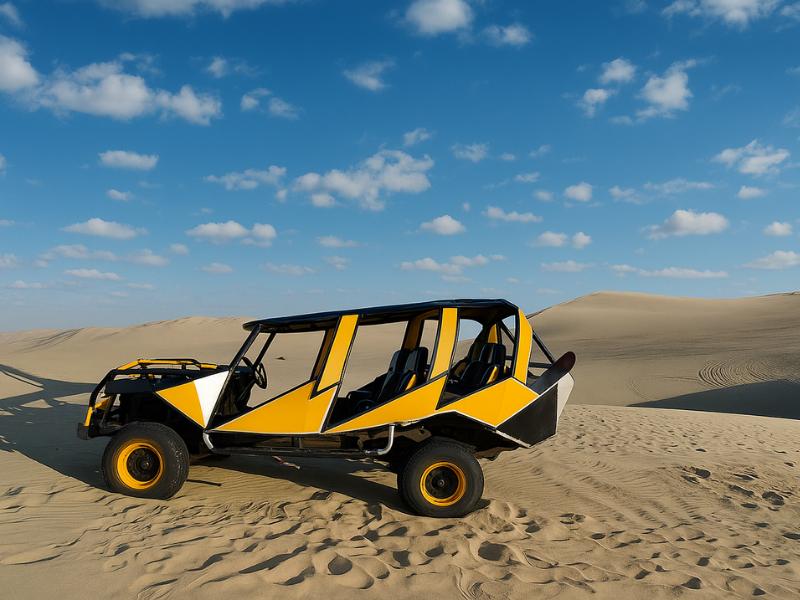
Dune buggy: The combination of speed, unpredictable terrain, and the open-air passenger experience creates universal child excitement that operates independently of age, attention span, or prior adventure activity exposure, with children as young as 4 responding to the steep descents and sharp turns with the authentic thrill reactions that passive entertainment like theme park rides produce at significantly higher cost. Children who profess boredom with every suggested activity before departure and skepticism about anything parents organize frequently spend the buggy transit sections with genuine wide-eyed expressions that parents photograph extensively as evidence of the unexpected enthusiasm.
Sitting sandboarding: A basic-board descent differs from standing sandboarding, but the lower riding position does not establish universal accessibility or safety. Follow the operator’s instructions and verify that the equipment and activity suit the participant.
Standing sandboarding: Teens 13 and older with athletic builds and genuine competitive drive approach adult success rates through determination and the advantageous fearlessness that adults often lack, while younger children attempting standing face the physical reality that insufficient body weight generates insufficient momentum to maintain standing balance on the initial board movement. The recommendation against younger children attempting standing isn’t conservative parental caution but genuine physical constraint that guides observe consistently regardless of individual children’s athletic ability or determination.
Oasis exploration: The lagoon circuit’s 15-minute walkable perimeter suits children’s attention spans while the visual drama of palm trees rising from desert water surrounded by massive sand dunes creates the fairy-tale landscape impression that children connect with viscerally in ways that adult appreciation for geological rarity doesn’t capture. Children consistently describe Huacachina using fantasy references – “like a hidden oasis in a movie” – suggesting the landscape triggers imagination engagement that activity-focused parents sometimes undervalue relative to the sandboarding and buggy experiences they organized the visit around.
Swimming: Children’s hierarchy of vacation priorities places swimming above virtually every organized activity regardless of how impressive the alternatives appear on paper, with hotel pool access determining child satisfaction ratings for accommodation more reliably than any other single factor. Lagoon swimming provides the nature-connected water experience that pools don’t replicate, though variable water quality makes supervised limited immersion more appropriate than the extended free-play swimming that clean pools enable for children who’ll stay in water until physically removed.
Wildlife: Honest assessment for parents who’ve considered Huacachina as wildlife-encounter destination should acknowledge the desert oasis offers minimal wildlife compared to Amazon, Galapagos, or even Paracas alternatives, with the occasional desert bird and the oasis fish visible from the lagoon edge comprising most wildlife encounters. Children who connect with natural landscapes rather than specific animal encounters find Huacachina’s dramatic scale compelling, while children specifically motivated by wildlife might find the desert environment less engaging than the photos suggested.
| Activity | Under 6 | Ages 6-10 | Ages 10-14 | Teens 14+ | Supervision Level | Notes |
|---|---|---|---|---|---|---|
| Dune Buggy | No verified infant option | Excellent | Excellent | Excellent | Parent nearby | Verify child seatbelt fit |
| Sitting Sandboarding | Not recommended | Excellent | Excellent | Excellent | Guide + parent | Immediate success |
| Standing Sandboarding | No | No | Low success – try | Moderate success | Close supervision | Don’t force |
| Lagoon Swimming | Supervised only | Yes, supervised | Yes | Yes | Active parent supervision | Water quality varies |
| Hotel Pool | Yes | Yes | Yes | Yes | Age-dependent | Book pool property |
| Dune Hiking | No | Short distances | Full hikes | Full hikes | Parent pace-setting | Early morning only |
Dune Buggy Tours With Children – What To Know
Age minimums: Age rules and equipment differ between operators. The verified Viator basic-board loop lists booking bands from age 11; the specialist outing lists bands from age 6. Neither establishes suitability for infants or toddlers. Confirm restraints, equipment fit and participation rules before paying.
Physical requirements: A child must meet the operator’s participation and restraint requirements. A parent holding a child is not a substitute for a properly fitted restraint. Discuss each child’s size, age, comfort and needs with the operator before booking.
Fear factor: Do not assume that a frightened child will enjoy the ride once it starts. Explain the activity honestly, respect a refusal and ask about a suitable alternative before departure.
Seatbelt reality: Child seatbelt fitting varies significantly across operators with some carrying properly adjusted child-sized restraints and others providing adult seatbelts that fit inadequately on small bodies, making specific equipment verification during booking rather than assuming standardized child safety provision that operators don’t uniformly guarantee. Ask specifically whether child restraints fit children of your specific ages and weights rather than accepting general assurances about seatbelt availability that adult-sized provisions technically satisfy.
Motion sickness: Children with car sickness history face elevated risk during the combination of winding desert routes, steep descents, and sharp lateral turns that dune buggy driving creates, with preventive measures including ginger chews or appropriate children’s motion sickness medication taken 30-60 minutes before departure, center seating away from the most motion-amplified outer positions, and avoiding large meals immediately before tours.
Eight-year-old from Melbourne who spent the entire pre-departure taxi ride telling his parents he wasn’t getting in “that scary thing,” gripped the buggy handles with white knuckles for approximately 90 seconds before turning to his father with a massive grin and spending the remainder of the 2-hour tour asking the driver to “go faster on the next hill,” then requested a second tour the following morning before the family had even finished breakfast.
Can’t decide between the two? I’ve compared sandboarding vs dune buggy in Huacachina tours so you know which one is actually worth your time and money.
Sandboarding With Children – Age-By-Age Assessment
Under 6: Sandboarding proves genuinely not recommended for children under 6 due to the physical reality that insufficient body weight fails to generate the board momentum that waxed surfaces require for meaningful descent speeds, creating frustrating non-movement experiences where children sit on boards that barely slide while older participants around them speed down identical slopes. The disappointment rather than safety concern drives the recommendation, with under-6 children often more upset by the activity not working than by any injury risk, and parents sometimes spending significant effort encouraging children down slopes that physics simply doesn’t cooperate with regardless of technique adjustments guides attempt.
Ages 6-8: Sitting sandboarding delivers immediate success for children in this age range with sufficient weight generating board movement on properly waxed surfaces while the sitting position’s inherent stability eliminates the balance requirements that their developing coordination couldn’t satisfy anyway. Parent positioning at the dune base rather than alongside creates the safety net that children this age need without the physical assistance that removes the independence element making the activity genuinely exciting rather than parent-assisted participation. Most children 6-8 complete first runs successfully, request additional attempts immediately, and remember the activity as a trip highlight months later with the specific detail recall that genuinely exciting experiences create.
Ages 9-12: Full independent sitting sandboarding with guide supervision rather than constant parent presence suits this age group’s developmental need for adult-adjacent rather than adult-alongside participation, with children demonstrating the body weight, basic coordination, and instruction-following capacity that unsupported successful runs require. Standing attempts become physically possible though success rates remain low at 10-15% for this age group, with the attempt value lying in the experience rather than the outcome – children who try standing and fall repeatedly often describe this as funnier and more memorable than the sitting runs that worked perfectly. Set standing expectations accordingly rather than measuring the activity by standing success.
Ages 13+: Teen success rates for standing sandboarding approach young adult levels when athletic ability, competitive drive, and sufficient body weight combine with the fearlessness that older children often maintain better than adults who’ve developed more sophisticated injury awareness. The standing challenge specifically appeals to teen psychology where demonstrating competence and pushing beyond what parents and younger siblings attempt creates the distinction that adolescents actively seek from shared family activities. Guides report teens frequently continuing standing attempts through 6-8 falls that adult participants would have abandoned after 2-3, with the persistence sometimes delivering late-tour success that becomes the entire family’s collective celebration moment.
Equipment sizing: Child-sized sandboards exist at very few Huacachina operators with most carrying adult boards that work adequately for children 8 and older who have sufficient weight and reach to grip sides comfortably, while younger children managing adult boards sometimes struggle with the width making side-gripping difficult. Ask specifically about child board availability when booking rather than assuming standard equipment accommodates all ages, with the specific question triggering honest operator responses about what they actually carry versus what their general family-friendly marketing claims.
We’ve covered sandboarding for beginners in Huacachina tours in detail so you know what gear is provided, how the instruction works, and what the dunes actually feel like.
| Age Group | Recommended Technique | First-Time Success | Supervision | Enjoyment Level | Notes |
|---|---|---|---|---|---|
| Under 6 | Not recommended | Very Low – weight insufficient | N/A | Low – frustrating | Stick to buggy |
| Ages 6-8 | Sitting only | 95%+ immediately | Parent at dune base | Very High | Most memorable activity |
| Ages 9-12 | Sitting + standing attempt | Sitting 99%, standing 10-15% | Guide supervision | Very High | Falls become funny, not frustrating |
| Ages 13+ | Both encouraged | Sitting 99%, standing 20-30% | Independent with guide | High – teen appropriate | Competitive drive helps standing |
| All ages | Equipment check | Varies | Age-dependent | N/A | Ask about child boards at booking |
Best Accommodation For Families In Huacachina
Pool priority: Properties with swimming pools transform family Huacachina experiences because children’s vacation satisfaction hierarchies place pool access above essentially every other consideration including room size, location, and amenities that adults prioritize, with the afternoon pool hours between activities providing the unstructured water play that children specifically request rather than the organized activities parents schedule. The practical benefit beyond child satisfaction involves the clean controlled swimming alternative to variable-quality lagoon water, giving parents the option of genuine extended swimming rather than the supervised brief lagoon dips that water quality concerns limit. Specifically confirm pools are filled and maintained before booking as some properties list pools that seasonal operation or maintenance schedules render unavailable during specific visit periods.
Room configurations: Family rooms accommodating 4 people in appropriate bed configurations rather than two adult doubles that children share awkwardly represent the priority search criterion for families, with Huacachina’s limited accommodation inventory making specific family room availability research before arrival essential rather than optimistic walk-in assumption. Connecting room options exist at very few properties given the small scale of most Huacachina accommodation, making family rooms the practical alternative that advance booking secures weeks ahead during peak season versus the same-day scramble that shoulder months sometimes permit. Ask specifically about bed configurations rather than accepting “family room” descriptions that operators apply to any room fitting 4 people regardless of whether those configurations suit actual family sleeping arrangements.
Budget options: Hostel dormitories prove entirely inappropriate for families with young children regardless of per-night cost savings, combining the sleep disruption that shared spaces create with the social environment that dorm settings assume adult independent travelers rather than families managing bedtimes and early morning activity schedules. Private rooms at budget properties starting around S/80-120 represent the minimum appropriate family accommodation, providing the sleep management and daily schedule flexibility that shared dorm arrangements fundamentally cannot deliver. The cost premium above dorm pricing represents genuine value rather than unnecessary luxury for families where children’s sleep quality directly determines following-day activity capacity.
Mid-range sweet spot: Properties in the S/120-200 range typically deliver the pool access, private family rooms, and sufficient amenity levels that genuinely improve family experiences without the luxury pricing that top-tier properties charge for incremental comfort improvements. Hotel Mossone and Huacachinero represent the mid-range tier historically favored by families for combining oasis-adjacent location, pool access, and room configurations accommodating families without the hostel-party-atmosphere problems that budget properties bring. Book these properties 1-2 weeks ahead during shoulder season and 3-4 weeks ahead during June-August peak to secure family rooms that limited inventory makes unavailable for last-minute family arrivals.
Kitchen access: Self-catering accommodation with kitchen facilities or at minimum refrigerator access reduces the restaurant dependency that picky eaters make genuinely stressful in a destination with 10-15 essentially identical menus and zero child-specific dining options. Bringing familiar snacks, breakfast items, and the specific foods that children reliably eat from Lima supermarkets eliminates the mealtime negotiations that unfamiliar menus create when tired children and limited restaurant patience combine at the end of activity-filled days.
First time in the Peruvian desert? Here’s how to visit Huacachina tours so you don’t show up unprepared for the heat, the sand, or the limited options inside the oasis.
| Accommodation Tier | Family Suitability | Pool | Family Rooms | Approximate Cost | Overall Family Rating |
|---|---|---|---|---|---|
| Budget Hostels (dorms) | Poor | Rare | No | S/30-50/person | 2/10 – inappropriate |
| Budget Private Rooms | Acceptable | Rare | Basic doubles | S/80-120/night | 5/10 – minimum workable |
| Mid-Range | Good | Usually yes | Family rooms available | S/120-200/night | 8/10 – recommended |
| Mid-Range Pool Properties | Excellent | Yes | Family rooms | S/150-220/night | 10/10 – best value families |
| High-End | Very Good | Yes | Family suites | S/250-400+/night | 9/10 – premium comfort |
Managing Heat And Sun For Children
Children burn faster: Desert UV combined with the sand reflection that doubles radiation exposure creates burn risk for children 2-3 times more severe than adults experience at identical exposure duration and protection levels, meaning the SPF 50 sunscreen that adequately protects parents proves insufficient for children without the clothing coverage that rashguards provide. Parents who apply sunscreen carefully to their own faces and arms while applying the same product less thoroughly to children because “children need less” get the protection calculation exactly backwards from what desert UV and faster-burning skin actually requires.
Rashguard non-negotiable: Long-sleeve UPF 50+ rashguards worn throughout all outdoor Huacachina activity represent the single most important children’s sun protection item, eliminating the reapplication burden that activity, sweating, and children’s resistance to repeated sunscreen application otherwise creates. The combination of rashguard covering torso, arms, and upper legs plus SPF 50+ on exposed face, neck, and hands provides comprehensive protection that sunscreen-only approaches rarely maintain consistently across 2-3 hours of outdoor activity. Buy children’s rashguards before arriving in Huacachina as local availability proves extremely limited.
Timing activities: Scheduling outdoor activities during 7-11am and 4-7pm windows while using 11am-3pm for hotel pool time, lunch, naps, and indoor rest creates the heat management structure that makes desert destinations family-workable rather than exhausting. The timing strategy aligns perfectly with Huacachina’s primary activity schedule since sunset dune buggy tours depart at 4-5pm, meaning the natural tour timing already occupies the optimal late-afternoon window with morning hours available for lagoon exploration, swimming, and the casual oasis time that families fill before afternoon activity departures.
Hydration for children: Children require more frequent hydration reminders than adults in desert environments and often refuse plain water at the volumes desert heat demands, with flavored electrolyte drinks, diluted juice, or the familiar branded beverages that children accept more readily than plain water providing practical hydration alternatives when water refusal creates dehydration risk. Bring preferred children’s drinks from Lima rather than expecting Huacachina’s limited shop inventory to carry specific familiar products, with the preparation eliminating the hydration negotiation that unfamiliar options and stubborn children create during activity periods.
Heat recognition: Early heat exhaustion signs in children including unusual fussiness, pale or flushed skin, stopping activity without explanation, and complaints of headache or stomachache require immediate shade access and hydration rather than encouraging continuation of activities that adult stamina assessment might otherwise support. Children don’t reliably self-report heat distress in terms that connect symptoms to heat causes, making adult monitoring responsibility rather than child self-reporting the protection mechanism in desert environments where heat exhaustion develops faster than most parents anticipate from previous non-desert travel experience.
Don’t underestimate the conditions out there. Here’s what to wear in Huacachina tours so you’re comfortable on the dunes without overheating or getting sunburned.
| Child Age | Sun Protection Priority | Recommended Products | Activity Timing | Supervision Level |
|---|---|---|---|---|
| Infants (under 2) | Maximum – most vulnerable | SPF 50+ mineral, full shade coverage | 7-10am only max | Constant shade access required |
| Toddlers (2-5) | Very High | SPF 50+ mineral, rashguard essential | 7-11am, 4-7pm only | Active parent monitoring |
| School Age (6-12) | High | SPF 50+ chemical/mineral, rashguard | 7-11am, 4-7pm, pool midday | Regular check-ins, reapplication reminders |
| Teens (13+) | High | SPF 50+, rashguard recommended | Standard activity times | Self-managed with parent reminders |
| All Ages | Consistent | Reapply every 90 min, neck + ears | Avoid 11am-3pm peak | Age-appropriate supervision |
Safety Considerations Specific To Families
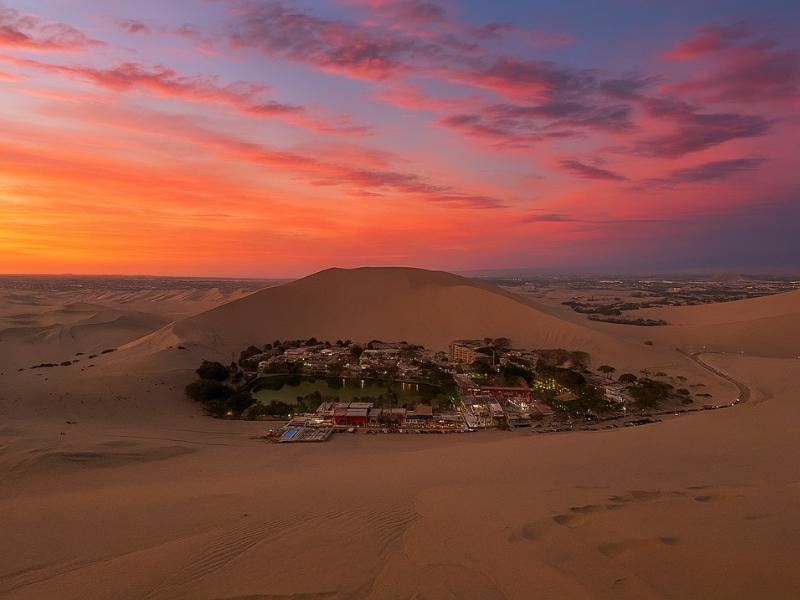
Lagoon swimming supervision: The lagoon’s variable water quality and non-uniform depth profile require active parent presence rather than the passive supervision that hotel pools with clearly marked shallow ends allow, with depth changes occurring without obvious visual indication and water clarity varying enough that bottom visibility proves unreliable for assessing actual conditions children are swimming in. Variable algae levels and seasonal maintenance affecting cleanliness make brief supervised swimming more appropriate than the extended free-play immersion that children left to their own devices naturally pursue, with parents making real-time quality assessments based on current visibility and clarity rather than assuming consistent conditions from visit to visit. The lagoon functions as scenic attraction and occasional swimming spot rather than maintained recreational facility, with hotel pools representing the superior supervised swimming environment for families where children’s extended water play matters.
Dune buggy child safety: Verifying functional child-appropriate seatbelt fitting before departure rather than after the buggy is moving represents the specific pre-tour check that parents often skip assuming adult safety briefing covers children automatically. Position children between parents or with parent immediately adjacent rather than in outside seats where lateral g-forces during sharp turns create the most significant holding demand, with guide communication about seating arrangements for young children producing the positioning adjustments that generic group seating doesn’t automatically provide. Reputable operators with maintained vehicles and responsible drivers create fundamentally different child safety environments than street tout alternatives cutting corners on both equipment maintenance and driving judgment.
Sandboarding injury prevention: Age-appropriate technique selection prevents the majority of sandboarding injuries affecting children, with sitting technique for under-13 eliminating the fall-related sand burns and bruised tailbones that standing attempts create and the technique mismatch between ambition and physical capability produces. Long pants and closed shoes for all sandboarding participants regardless of age represent the non-negotiable clothing minimum, with children’s faster skin healing providing false reassurance that proper protection makes irrelevant rather than relying on. Bring designated old clothes specifically for sandboarding to eliminate the parental anxiety about ruined children’s clothing that sometimes translates into restricting activity participation that proper clothing preparation would have enabled freely.
Sun and dehydration: The primary child health risk in Huacachina deserves more planning attention than crime or activity safety concerns that parents frequently prioritize based on general travel anxiety rather than destination-specific incident patterns. Desert UV combined with children’s faster burn rates, physical exertion increasing heat absorption, and children’s unreliable self-reporting of distress creates a risk profile requiring proactive scheduled management rather than reactive response to symptoms that appear after preventable damage has already occurred. Rashguards, SPF 50+ reapplication every 90 minutes, minimum 500ml water per hour of outdoor activity, and the 11am-3pm indoor rest schedule collectively address the actual primary health risk rather than the dramatic but statistically unlikely safety concerns receiving disproportionate planning attention.
Medical preparedness: Basic children’s first aid kit including antiseptic for sand abrasion cleaning, children’s pain relief medication, antihistamines for unexpected reactions, oral rehydration salts for dehydration treatment, and the specific medications managing any existing conditions represents sensible preparation for a destination with minimal on-site medical facilities. Ica city hospitals 10 minutes away by taxi handle genuine medical situations adequately though waiting times and specialist availability differ from major city hospitals, making travel insurance covering medical costs and the awareness of the nearest facility address appropriate preparation for remote destinations. Note the taxi number from your accommodation specifically for medical transport rather than discovering transportation uncertainty during an actual emergency when clear thinking proves most difficult.
Not sure about bringing nervous family members or first-timers? Our breakdown of are Huacachina tours safe helps you decide based on your group’s comfort level.
How Long To Stay With Children
Optimal duration: One night covers everything Huacachina offers families with children without the second-day activity exhaustion that limited options create faster for children than adults, with the single-night format delivering sunset dune buggy tour, evening oasis atmosphere, morning swimming, and next-day casual time before checkout completing the full family Huacachina experience without the “what do we do now” problem that day three presents regardless of how much children enjoyed the first two days. The compact activity menu that makes extended adult stays feel too long operates even faster with children whose activity saturation point arrives earlier than parents who can fill time with reading, relaxing, and the adult contentment with simply being somewhere beautiful that children haven’t yet developed.
Day trips: Viable only from Ica where the 10-minute journey makes same-day returns genuinely practical, with Paracas day trips creating acceptable though rushed timing, and Lima day trips representing pointless 10-hour transport commitments delivering 90 minutes of oasis time that misses the sunset tours operating when day-trippers must depart. Families routing through Huacachina from Paracas toward Nazca find the natural 1-night stop format aligning perfectly with travel logistics rather than requiring itinerary contortion, with the overnight format not requiring special justification when route geography already creates natural stopping points.
Activity scheduling: Arrival at 2-3pm allows hotel check-in, brief pool time or lagoon exploration, and 4-5pm sunset dune buggy tour departure that serves as the first-evening activity anchoring the entire visit, with morning swimming, leisurely breakfast, final lagoon photographs, and 10-11am checkout completing the schedule without rushed transitions that tire children and stress parents. This scheduling avoids the common mistake of arriving too late for the sunset tour on arrival day, which forces either rushed preparation or full additional night booking to access the primary activity justifying the destination visit.
Multiple child age groups: Families with toddlers plus school-age children face the scheduling complexity of different activity participation levels, with older children ready for full sandboarding sessions while younger siblings require parent supervision during activities the older children can handle independently. The practical solution involves one parent accompanying older children through sandboarding while the other manages younger children at dune base positions, with the buggy tour accommodating all ages simultaneously providing the shared family activity that different-age scheduling otherwise fragments.
Practical recommendation: Book single-night accommodation with morning departure the following day, aligning checkout timing with the natural post-swimming, post-breakfast rhythm that avoids both the rushed early departure that insufficient activity time creates and the extended checkout-day boredom that second full days bring when children have already experienced everything Huacachina offers families. The timing also aligns with afternoon bus connections to next destinations, making the one-night format logistically efficient rather than requiring schedule compromises.
Wondering if a day trip is enough or if you should stay overnight? Here’s how long you need in Huacachina tours to make the most of it without overstaying.
FAQ: Huacachina Family Questions
1. Is Huacachina safe for children?
Yes genuinely safe with primary risks involving sun exposure and dehydration rather than crime, managed through rashguards, consistent sunscreen reapplication, and hydration schedules. Reputable dune buggy operator selection and age-appropriate sandboarding technique choices address the activity-specific risks that preparation handles completely.
2. What age is appropriate for Huacachina dune buggy tours?
Most children 4 and older manage dune buggy tours with parent seated immediately adjacent and verified child seatbelt fitting, with individual assessment based on the child’s ability to follow basic instructions and tolerate unexpected motion mattering more than chronological age. Communicate exact ages when booking rather than at departure allowing operators to prepare appropriate seating arrangements.
3. Can toddlers visit Huacachina?
Possible though limited in activity participation, with dune buggy tours the primary accessible activity requiring parent lap riding for very young children and sandboarding not recommended for under-6 due to insufficient weight. Families with toddlers plus older children can make visits work through activity splitting, though toddler-only family visits to Huacachina don’t justify the journey time from Lima given limited engagement options.
4. Is sandboarding safe for children?
Sitting sandboarding proves very safe for children 6 and older with proper clothing including long pants and closed shoes, while standing technique should wait until 13 when success rates improve and injury risk justification matches realistic outcome expectations. The soft sand landing surface prevents serious injuries making the activity genuinely family-appropriate rather than adult-only adventure sport.
5. How long should families stay in Huacachina?
One night covers all family-appropriate activities without the second-day boredom that limited options create faster for children than adults. The single-night format delivering sunset tour, evening oasis time, morning swimming, and next-day departure aligns perfectly with children’s activity attention spans and family travel logistics.
6. What do children enjoy most in Huacachina?
Dune buggy tours consistently produce the strongest child reactions through the speed and terrain that delivers theme-park equivalent excitement in genuine desert setting, followed closely by sitting sandboarding where immediate success creates pride and repeat-request enthusiasm. Hotel pool time frequently competes with these organized activities in children’s own satisfaction rankings.
7. Is there swimming for children in Huacachina?
Both lagoon and hotel pool swimming exist with important quality differences, with hotel pools at mid-range properties providing the cleaner controlled environment appropriate for extended child swimming and the lagoon offering the nature experience that variable water quality makes advisable to limit to brief supervised sessions. Book pool accommodation specifically rather than hoping adequate swimming exists regardless of property.
8. Should families with young children skip Huacachina entirely?
Not necessarily, though realistic activity assessment matters more than blanket recommendations. Families with children 6 and older have genuinely good reasons to include Huacachina, while families with only children under 4 might honestly find the journey time-to-experience ratio poor compared to Peru destinations offering more age-appropriate engagement. The 1-night format minimizes the stakes making even uncertain family fits worth attempting for families routing past naturally.
9. Is Peru Hop (check prices here) a good option for families traveling with children?
It tends to suit families well for the same reasons it suits solo travelers without Spanish: hotel pickup instead of a terminal, a bilingual host on the bus, and a flexible pass rather than a fixed schedule if a child needs an unplanned break. Peru Hop stops at Huacachina on its way from Lima and Paracas toward Nazca, Arequipa and Cusco.
Glossary: Huacachina Family Travel Terms
Age-Appropriate Activity Assessment: Honest evaluation of which Huacachina activities suit specific children based on individual age, physical development, and personal temperament rather than optimistic assumptions that marketed family-friendly activities work equally well across all child ages. Prevents both the over-restriction denying capable children enjoyable experiences and the over-inclusion exposing younger children to frustrating activities their physical development doesn’t yet support.
Child Sun Protection Requirements: Desert UV protection calibrated for children’s 2-3x faster burn rates requiring rashguards, SPF 50+ mineral sunscreen, and reapplication every 90 minutes rather than the lower-SPF less-frequent approach adequate for adults. The protection standard significantly exceeds what parents accustomed to humid-climate sun exposure typically apply, making the desert-specific escalation genuinely necessary rather than excessive caution.
Family-Friendly Operator: Tour company actively accommodating children through child-sized equipment inventory, appropriate seatbelt fitting for small bodies, guides engaging children directly rather than through parents, and flexible group pacing responding to family needs. Distinguishable from operators claiming family-friendliness in marketing while lacking child-specific equipment and experience.
Motion Sickness Prevention: Pre-tour management strategy for children with car sickness history combining appropriate children’s medication taken 30-60 minutes before departure, ginger chews, center buggy seating minimizing motion amplification, and avoiding large pre-tour meals. Proactive prevention dramatically more effective than reactive management after symptoms develop during active desert driving.
Supervised Sandboarding: Age-appropriate supervision levels ranging from parent at dune base for 6-8 year olds through guide-only supervision for 9-12 year olds through independent adult-equivalent participation for teens, matching oversight intensity to developmental stage rather than applying uniform adult supervision standards or assuming children manage independently. Proper supervision enables children to develop genuine confidence rather than eliminating activity engagement through excessive restriction.
Desert Heat Management for Children: Structured approach combining activity timing avoiding 11am-3pm peak heat, hydration schedules with appropriate children’s drinks, heat exhaustion symptom recognition and immediate response protocols, and clothing choices minimizing heat absorption. More critical for children than adults given faster heat exhaustion development and unreliable self-reporting of distress symptoms.
Pool Accommodation Priority: Family accommodation selection strategy prioritizing properties with functional maintained swimming pools above other amenity considerations, based on children’s consistent vacation satisfaction hierarchy placing pool access above room size, location, and adult-prioritized features. Clean pool access also provides superior supervised swimming alternative to variable-quality lagoon that water quality concerns appropriately limit for extended child immersion.
Picky Eater Strategy: Pre-arrival preparation bringing familiar food items from Lima supermarkets including breakfast staples, preferred snacks, and specific products children reliably accept, reducing restaurant dependency in a destination offering 10-15 essentially identical tourist menus without child-specific options. Eliminates the mealtime negotiations that unfamiliar limited menus create when tired hungry children and limited restaurant patience combine.
Bring Your Family To Huacachina
Huacachina works genuinely well for families with children 6 and older who bring honest activity expectations, proper sun protection, and the single-night format that aligns perfectly with both available activities and children’s attention spans. The destination proves neither the impossible backpacker-only environment that marketing imagery suggests nor the fully equipped family resort that some parents hope for, landing instead in the honest middle ground of compact adventure destination rewarding specific preparation.
Children between 6 and 14 get the most from Huacachina visits, with dune buggy tours delivering universal excitement across all ages and sitting sandboarding providing the immediate success experience that organized activities rarely create for children participating at reduced capacity. Proper preparation involving pool accommodation booking, rashguard and SPF 50+ sun protection, designated old sandboarding clothes, and realistic standing technique expectations covers the practical differences separating families who leave calling Huacachina a Peru trip highlight from those who found it harder than expected.
Book family-appropriate tours at huacachina.tours where we carry child equipment, communicate honestly about age suitability rather than accepting all bookings regardless of fit, and have spent years helping families navigate the preparation that makes the difference between struggling through desert heat with unprepared children and watching your kids discover genuine desert adventure that they’ll describe to friends for months afterward.
From the guides at Huacachina Tours who’ve watched terrified children become buggy enthusiasts within minutes, seen 7-year-olds complete sandboarding runs that made their parents look incompetent by comparison, handed emergency sunscreen to parents discovering desert UV intensity the hard way, and helped hundreds of families have visits that nobody regretted – proper preparation turns Huacachina from questionable family gamble into one of Peru’s most memorable family experiences for the age groups it genuinely suits.
Choose Your Huacachina Outing
Have a travel date in mind? Check your four-hour sandboard and sandski experience before arranging the rest of your trip.
A specialist Huacachina outing with instruction, board or ski equipment, protective equipment, buggy transport and sunset. English is listed. Pickup must be coordinated; the local meeting point is also available. Published booking age bands start at 6. Not recommended during pregnancy or with back or cardiovascular conditions.
General recommendation. Confirm your party's eligibility and arrangements with the provider.
Which Outing Fits Your Family?
English is listed for these products. Time estimates exclude separate transfers and check-in. Child ages are booking bands, not a safety assessment. The specialist recommendation is limited to age 70 pending provider confirmation because listings differ.
| Outing | Duration | What You Get And What To Confirm |
|---|---|---|
| Two-Hour Buggy And Sandboarding | 2 hours | A local Huacachina loop with a driver, basic boards and a sunset stop. Meet at Arenas Bar & Lounge and return there; admission is extra. English is listed. Published booking age bands start at 11. |
| Four-Hour Sandboard And Sandski Experience | 4 hours | A specialist Huacachina outing with instruction, board or ski equipment, protective equipment, buggy transport and sunset. English is listed. Pickup must be coordinated; the local meeting point is also available. Published booking age bands start at 6. Not recommended during pregnancy or with back or cardiovascular conditions. |
Choose a date to see scheduled departures. Availability and final price are confirmed on Viator.
Check Your Huacachina Sandboarding Date