Sandboarding For Beginners In Huacachina
Can beginners really sandboard in Huacachina — or is it only for pros? Discover the truth about sitting vs. standing runs, real difficulty levels, safety tips, what to wear, and what first-timers actually achieve. Honest advice from Huacachina Tours so you know exactly what to expect before you hit the dunes.
Travelers watching Huacachina sandboarding videos see people flying down massive dunes either standing on boards like snowboarders or sitting and sliding at thrilling speeds, wondering whether this activity requires athletic ability and board sport experience or if complete beginners can actually participate successfully. The uncertainty proves reasonable because the videos showing experts make standing sandboarding look easy while the sitting alternative appears too simple to be genuinely fun, leaving first-timers unsure which technique they’ll actually attempt or whether they can do either. You can check a sandboarding tour that includes boards and a dune buggy to see typical clothing and how the runs are set up.
In Brief: A basic-board dune loop and an instructed standing-sandboard session are different products. Choose instruction if learning the sport is your priority.
Check Your Huacachina Sandboarding DateAt Huacachina Tours where our guides teach sandboarding to thousands of complete beginners annually including children, elderly visitors, athletic twenty-somethings, and everyone between, we provide honest assessment of both techniques with realistic difficulty expectations rather than marketing promises that everyone masters standing runs. This guide covers sitting technique that genuinely works for all ages and fitness levels, standing technique proving substantially harder than videos suggest, equipment and how it actually functions, safety and common injury reality, what clothing prevents sand burns and abrasions, the learning curve across your first several runs, and realistic expectations about what percentage of beginners actually succeed at standing versus sitting throughout their Huacachina sandboarding experience.
Can Beginners Sandboard In Huacachina?
Yes absolutely with sitting technique delivering genuinely thrilling experiences for complete beginners of all ages and fitness levels, while standing technique proves substantially more challenging though learnable for determined athletic individuals willing to accept multiple falls during the learning process that typical 2-hour tours provide.
Two distinct methods: Sitting sandboarding (also called sand sledding) involves sitting on the board facing forward with feet on the board and hands gripping the sides, requiring essentially zero balance or athletic ability while still delivering exciting high-speed descents. Standing sandboarding mimics snowboarding technique with riders standing sideways on the board controlling descent through weight shifts and balance, requiring genuine skill that most first-timers fail to master despite the softer sand creating less painful consequences than snow crashes.
What most people actually do: Roughly 70% of tour participants sit exclusively throughout all runs after either trying standing once and immediately giving up or wisely recognizing their limitations before attempting, 20% attempt standing multiple times across several runs before accepting sitting as their primary method, and only 10% achieve genuine standing success completing full runs without falling. The statistics prove remarkably consistent across thousands of tours regardless of group demographics, with standing success remaining the exception rather than norm that marketing videos and social media posts disproportionately showcase.
Equipment provided: All dune buggy tours include sandboards, board waxing for speed optimization, and basic verbal instruction covering both sitting and standing techniques as part of standard tour pricing without additional rental fees or equipment charges. Guides demonstrate proper positioning, explain common mistakes, and provide individual feedback during runs though the instruction quality and attention prove limited compared to dedicated board sport lessons given the tour format covering multiple activities beyond sandboarding exclusively.
Practical recommendation: Complete your first run sitting regardless of athletic confidence or prior board sport experience, using this initial descent to understand speed, board behavior, and dune steepness before attempting standing on subsequent runs. The sitting success builds confidence and eliminates the disappointing scenario where standing failures on first attempts create negative experiences preventing enjoyment of sitting technique that nearly everyone finds genuinely fun once trying it without the pressure of standing comparison.
| Factor | Sitting Sandboarding | Standing Sandboarding |
|---|---|---|
| Difficulty Level | Very Easy | Difficult |
| First-Time Success Rate | Not independently established | 10% |
| Balance Required | None | Substantial |
| Speed Achieved | 20-30 mph | 25-35 mph if successful |
| Fun Factor | 8/10 – Genuinely thrilling | 9/10 if successful, 3/10 if constant falling |
| Injury Risk | Very Low | Low-Moderate (sand burns, bruises) |
| Age Suitability | 6-80+ years | 12-40 realistically |
| Fitness Required | None | Moderate leg strength, core stability |
| Learning Curve | Immediate | Hours-days of practice |
| Typical Runs to Master | 1 (instant) | 10-20+ for most people |
| Who It Suits | Everyone | Athletic younger adults, board sport experience |
| Embarrassment Factor | None | High from repeated public falls |
Sitting Sandboarding – The Easy Option Everyone Can Do
What it actually is: Sitting sandboarding involves sitting on the board with your back straight, feet placed flat on the board surface facing forward, hands firmly gripping the board edges near your hips, and sliding downhill face-first in a position resembling a sled ride more than traditional board sport technique. The method eliminates balance requirements entirely through the stable seated position, with gravity and board waxing providing all the speed generation while hand grip and leg pressure enable basic directional adjustments. Most beginners complete their first sitting runs successfully within seconds of attempting, with the primary adjustment involving fighting the instinct to lean forward when speed increases as proper technique requires leaning slightly back maintaining weight over the board’s rear section.
Why it works: Sandboarding remains an adventure activity with a risk of injury. Terrain, equipment, instruction and personal suitability matter; soft sand does not make a fall harmless.
Speed reality: Properly waxed boards on steep dunes reach 20-30 mph during sitting descents creating genuinely thrilling experiences with wind, acceleration sensation, and genuine adrenaline response that surpasses expectations most beginners bring assuming sitting represents merely safe fallback option. The speed proves fast enough producing real excitement without the control anxiety that standing technique’s higher speeds and less stable position create, with most participants describing sitting as more fun than anticipated rather than disappointment after abandoning standing attempts. Speed variations depend primarily on dune steepness and board waxing quality rather than rider technique, meaning all participants achieve similar speeds regardless of individual athletic ability or prior experience.
Who succeeds: Previous experience, comfort, equipment and individual restrictions matter more than a blanket age or fitness claim. Tell the operator about your needs before booking. The published age bands and restrictions differ between the shortlisted activities.
Technique tips: Ask the instructor to demonstrate the starting position, braking method and safe stopping area for the actual board you will use. Practice on a suitable slope under supervision; do not improvise a technique from an online description.
Fifty-five-year-old accountant from Toronto who “hadn’t done anything remotely athletic in a decade” and specifically requested sitting only throughout her tour later told guides that completing four sitting runs at full speed down steep dunes proved “genuinely the most fun I’ve had on vacation in years, not some participation trophy activity for people too scared to try standing.”
We’ve broken down sandboarding vs dune buggy in Huacachina tours so you can figure out which suits your group – or whether you should just do both.
Standing Sandboarding – The Challenge Most People Attempt
Snowboarding comparison: Standing sandboarding technique mirrors snowboarding almost exactly with sideways stance, weight-shift steering, and the same basic body mechanics creating familiar movements for anyone with prior board sport experience making the transition relatively straightforward. The primary differences involve softer sand creating more forgiving consequences for falls that would cause serious injury on hard-packed snow, while the sand surface’s increased friction requires more aggressive waxing and weight commitment to maintain momentum that ice and snow provide more easily. Experienced snowboarders generally achieve standing sandboarding success within 2-3 attempts once adjusting to the different surface characteristics, though complete beginners face learning curves similar to first-time snowboarding attempts without the benefit of graduated learning slopes that ski resorts provide.
Difficulty reality: Most first-time standing attempts result in immediate falls occurring within 3-5 seconds after the pop-up from sitting to standing position, with the brief successful moment before inevitable crash providing just enough encouragement that determined participants try repeatedly despite accumulating sand burns and bruised pride. Achieving full runs from dune top to bottom without falling requires practice most participants cannot complete within the 4-6 runs that typical 2-hour tours accommodate, with genuine standing mastery remaining elusive for casual one-time visitors who lack the extended practice sessions that competence development actually requires. The difficulty surprises most athletic visitors who assumed their general fitness and coordination would translate directly to board control, discovering that standing sandboarding represents genuine sport skill rather than adventure activity that any reasonably fit person can execute successfully.
What makes it hard: Soft sand at takeoff points eliminates the firm surface that standing technique requires for initial pop-up and first several seconds of board control, creating unstable launching conditions where balance proves difficult establishing before downhill momentum builds. Board control requires constant subtle weight adjustments responding to speed changes, terrain variations, and the momentum shifts that sand’s variable resistance creates unpredictably throughout descents, demanding focus and quick reflexes that beginners rarely possess during adrenaline-filled first attempts. Speed increase anxiety affects most beginners as acceleration builds beyond comfortable levels, triggering panic responses including standing too upright, leaning back excessively, or attempting emergency bails that guarantee crashes where maintaining committed stance would have delivered successful runs.
Success rates by attempt: First standing attempts see roughly 10% success rates among beginners with no prior board sport experience, with most participants falling during the critical pop-up moment or within first 3-5 seconds after standing. Second attempts incorporating learning from first failures show improved 25% success rates as participants better understand required commitment and adjust technique based on what caused initial crashes. Third and subsequent attempts reach 40% success rates among genuinely determined learners who’ve analyzed their failures, watched successful runs, and developed mental models of proper technique, though time constraints and accumulating minor injuries often prevent most tour participants reaching this attempt count.
Who actually succeeds: Younger adults in their 20s-30s with natural athletic ability achieve highest success rates, particularly those with skateboarding, surfing, or other board sport experience providing transferable balance and body awareness skills. Genuinely determined individuals willing to endure multiple painful falls without giving up succeed more often than naturally athletic participants who quit after 2-3 attempts, with mental persistence proving equally important as physical capability. Children under 12 rarely succeed due to insufficient weight generating momentum and leg strength maintaining bent-knee position, while adults over 45 face both physical coordination challenges and justified caution about injury risk that younger participants dismiss more easily.
| Success Factor | Low Probability (20-30%) | Moderate Probability (40-60%) | High Probability (70-80%) |
|---|---|---|---|
| Age | Under 12 or over 45 | 35-45 years | 18-34 years |
| Fitness Level | Sedentary, low flexibility | Average fitness | Athletic, active lifestyle |
| Board Experience | None | Skateboarding/surfing casual | Snowboarding experienced |
| Determination | Gives up after 1-2 attempts | Tries 3-4 times | Determined 5+ attempts |
| Natural Balance | Poor coordination | Average | Exceptional balance |
| Fear Management | High anxiety, cautious | Moderate nerves | Confident, commits fully |
| Weight | Under 100 lbs or over 220 lbs | 120-200 lbs | 140-180 lbs optimal |
| Learning Style | Doesn’t watch others | Observes some | Studies technique carefully |
The Learning Process – What Your First Runs Actually Look Like
Run 1 sitting: Guides direct all participants to sit for the first run regardless of athletic confidence or prior board sport experience, with 99% of people completing this initial descent successfully while learning how fast boards actually move, how steep the dunes feel from top positions, and how sand spray feels hitting their face during 20-30 mph descents. The universal success builds confidence and eliminates the anxiety that unknown speed and conditions create, with most participants arriving at the bottom grinning and immediately asking when they can go again. First runs typically occur on moderate-slope dunes rather than the steepest options, giving beginners manageable introduction before guides escalate to more dramatic descents during subsequent stops.
Run 2 standing attempt: Most athletic participants and those with board sport experience attempt standing on their second run despite guides recommending additional sitting practice, with roughly 90% falling within the first 3-5 seconds after popping up from sitting position to standing stance. The failures typically occur during the critical transition moment when weight shifts from stable seated position to unstable standing balance, or immediately after when speed builds faster than beginners anticipate and panic responses trigger. Falls involve forward tumbles, sideways crashes, or sitting-down collapses as legs give out under the unexpected force, with most participants emerging from sand clouds laughing at themselves while simultaneously nursing minor scrapes and bruised pride.
Run 3-4 standing practice: Determined participants who haven’t given up after second-run failures show modest improvement during third and fourth attempts, with some achieving 5-10 seconds of successful standing before eventual falls while others repeat identical failure patterns without apparent learning. The improvement varies dramatically based on individuals’ capacity to analyze what caused previous crashes and adjust technique accordingly, with thoughtful learners making visible progress while those simply hoping athletic ability carries them through show minimal advancement. By the fourth run many participants have accumulated enough minor injuries – sand-burned hands, scraped knees, bruised tailbones – that pain consideration factors into decisions about continuing standing attempts versus switching to sitting exclusively.
Run 5-6 decision point: Tours reaching fifth and sixth runs present the critical decision where participants either commit to additional standing attempts accepting they probably won’t achieve success during this specific tour, or pragmatically accept sitting as their primary method and focus on enjoying remaining runs without the frustration repeated failures create. Some athletic visitors remain determined achieving at least one successful standing run regardless of accumulated falls, viewing persistence as personal challenge worth the discomfort, while others recognize that sitting delivers genuinely fun experiences without the pain and decide optimization beats ego. Guides report that visitors who switch to sitting around this point typically express relief and enjoy final runs more than those who stubbornly continue failing at standing throughout remaining tour time.
Time pressure: Standard 2-hour dune buggy tours visit 3-4 different dune locations allocating approximately 20-30 minutes per stop, with actual sandboarding time per location reaching 15-20 minutes after accounting for hiking uphill carrying boards and group rotation management. The time constraints limit most participants to 4-6 total runs across the entire tour, creating insufficient practice volume for standing technique mastery that realistically requires 10-20+ attempts for most beginners. The compressed timeline means participants must decide quickly whether to persist with standing attempts or switch to sitting, with those who spend all six runs falling at standing missing the opportunity to enjoy successful sitting experiences that time better allocated would have provided.
Former college soccer player from California who “assumed athletic background meant automatic sandboarding success” spent first five runs falling during standing attempts, finally tried sitting on the sixth run at guides’ encouragement, and later admitted “I wasted most of the tour being stubborn when sitting turned out genuinely fun and I should have just accepted it after the second crash.”
Safety And Injury Reality
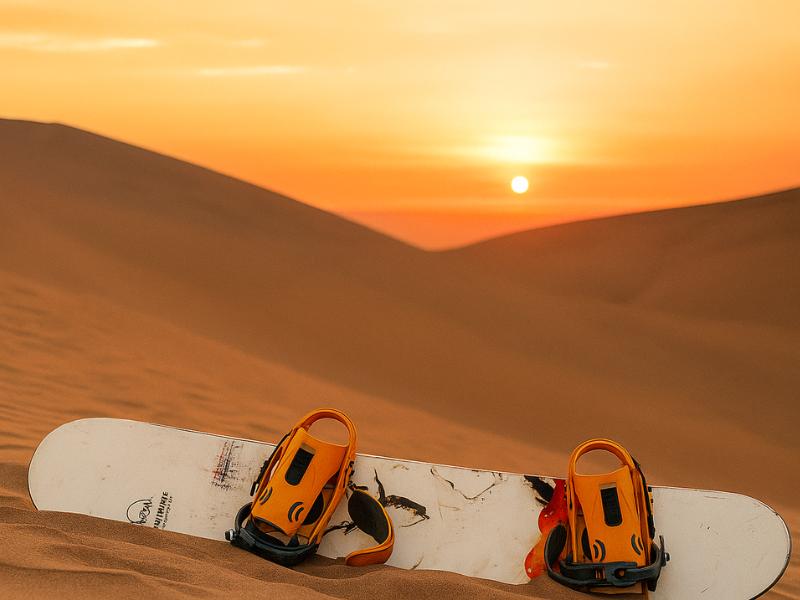
Common injuries: Sand burns on palms and knees represent the most frequent sandboarding injuries occurring when standing attempts result in hands-first or knee-first impacts on rough sand surfaces, creating abrasions similar to carpet burns that sting intensely and require careful cleaning to prevent infection. Bruised tailbones affect participants who land sitting-down hard during standing attempt failures, creating painful impacts that don’t cause serious damage though make subsequent sitting on buses and hard surfaces uncomfortable for 2-3 days afterward. Scraped elbows, abraded forearms, and minor cuts from board edges occur occasionally when falls involve sliding or tumbling rather than clean drops, with these injuries requiring basic first aid attention though rarely anything beyond cleaning and bandaging.
Serious injury rarity: The soft sand landing surface prevents the broken bones, torn ligaments, and concussions common in snowboarding where hard-packed snow and ice create unforgiving impact surfaces, with Huacachina guides reporting essentially zero serious injuries requiring hospital treatment across thousands of annual participants. The worst injuries typically involve deep sand burns requiring medical cleaning or badly bruised tailbones causing multi-day discomfort, though even these remain relatively uncommon affecting perhaps 2-3% of participants versus the minor scrapes and bruises that 30-40% of standing attempt participants accumulate. The safety record proves remarkably good given the activity’s adventure sport classification, with sandboarding delivering genuine thrills without the injury risk characterizing comparable adrenaline activities.
Face plants: Forward-falling face-first crashes happen frequently to standing attempt participants who lean too far forward during descent or catch edges unexpectedly, resulting in mouthfuls of sand, temporary disorientation, and the thorough coating that makes these falls visually spectacular for observing tour members. The embarrassment factor exceeds the actual danger substantially with most face plant victims emerging uninjured beyond scraped hands and sand-filled eyes, though the experience proves sufficiently unpleasant that many participants switch to sitting immediately after their first face-first encounter. Guides encourage keeping mouth closed during falls and wearing sunglasses throughout runs specifically to minimize the sand ingestion and eye irritation that face plants cause, with these simple precautions reducing the discomfort though not the frequency of forward crashes.
Sun exposure: Extended time on bright reflective sand surfaces without any shade creates substantial sunburn risk particularly for fair-skinned visitors who underestimate desert UV intensity, with the combination of direct sun plus sand reflection essentially doubling radiation exposure compared to normal outdoor activities. The 2-hour tour duration with multiple 5-10 minute periods standing on exposed dunes waiting for group rotation means participants accumulate 30-45 minutes direct sun exposure, with backs, necks, and faces particularly vulnerable during the face-down sandboarding position. Afternoon sunset tours provide slightly reduced UV compared to midday exposure though still require thorough sunscreen application, while the cooling evening temperatures mask developing burns until post-tour examination reveals red shoulders and necks that inadequate protection allowed.
Dehydration: Physical exertion from repeatedly hiking uphill carrying boards combined with desert heat and the cardiovascular demand that sandboarding creates requires consistent water consumption throughout tours, with guides reporting that 20-30% of participants show dehydration symptoms including headaches, dizziness, and fatigue by tour conclusion. Most operators provide bottled water though participants should bring personal water bottles ensuring adequate hydration regardless of tour provision, with minimum 1 liter consumption during 2-hour tours representing baseline requirement that hot weather and extensive standing attempts increase substantially. The dehydration risk proves higher than most participants anticipate given the relatively short tour duration, with the desert environment’s low humidity creating rapid moisture loss that visitors from humid climates particularly underestimate.
Wondering about the risks before you book? Check out our guide on are Huacachina tours safe – it covers everything from vehicle conditions to what happens when things go wrong.
| Injury Type | Sitting Sandboarding | Standing Sandboarding | Severity | Prevention |
|---|---|---|---|---|
| Sand Burns (hands/knees) | Very rare | Common (40-50% of attempts) | Minor-Moderate | Long sleeves, pants, gloves optional |
| Bruised Tailbone | Rare | Moderate (15-20%) | Moderate | Proper falling technique, accept falls coming |
| Scraped Elbows/Arms | Very rare | Occasional (10-15%) | Minor | Long sleeves, controlled falls |
| Face Plants | Essentially never | Common (30-40%) | Minor but unpleasant | Keep mouth closed, wear sunglasses |
| Sunburn | Moderate risk | Moderate risk | Moderate | High SPF sunscreen, reapply, cover skin |
| Dehydration | Moderate risk | High risk | Moderate-Serious | 1L+ water, drink consistently |
| Twisted Ankle | Rare | Rare | Moderate | Proper footwear, careful hiking |
| Serious Injury | Essentially never | Very rare (<1%) | N/A | Follow guide instructions |
What To Wear For Sandboarding
Shoes: Closed-toe sneakers represent the ideal footwear providing ankle support during uphill hikes, protection during board carrying, and the coverage preventing sand burns that sandals and flip-flops guarantee causing on exposed feet. Tennis shoes, running shoes, or hiking boots all work perfectly while open-toed sandals create genuinely painful experiences as sand friction during falls and the abrasive contact during sitting position runs cause raw skin between toes and on foot tops. Flip-flops prove completely inappropriate flying off feet during runs and providing zero protection, with guides occasionally refusing to allow participants attempting tours in flip-flops specifically because the resulting injuries create problems for everyone involved.
Pants: Long pants provide essential protection for knees and lower legs against sand abrasion during standing attempt falls, with denim jeans, athletic pants, or lightweight hiking pants all delivering the coverage that prevents the scraped knees affecting 40-50% of participants wearing shorts. Shorts expose skin directly to rough sand during knee-first impacts and sliding falls, creating painful abrasions requiring cleaning and sometimes bandaging that long pants prevent entirely. The pants recommendation applies even during hot weather as the protection value outweighs comfort considerations, with lightweight breathable fabrics providing adequate ventilation while maintaining protective coverage that shorts fundamentally cannot deliver.
Shirts: Long-sleeve shirts offer recommended protection for standing attempt participants likely experiencing multiple falls, preventing the scraped elbows and abraded forearms that short sleeves allow when arms contact sand during crashes. Sitting-only participants can wear short sleeves acceptably as their stable position eliminates most fall risk, though sun protection considerations still favor long sleeves for UV defense during extended dune exposure. Lightweight moisture-wicking fabrics work better than cotton retaining sweat and sand, with athletic shirts designed for outdoor activities proving ideal for the combination of physical exertion and desert environment that sandboarding creates.
Sun protection: High-SPF sunscreen (50+ recommended) applied thoroughly to all exposed skin including face, neck, ears, and hands proves essential for the extended sun exposure that 2-hour tours create, with reapplication after first hour providing insurance against the burns affecting inadequately protected participants. Sunglasses protect eyes from both UV radiation and the sand spray that sitting position runs generate, with secure-fitting sports sunglasses preferred over loose fashion styles that fall off during runs. Hats provide additional face and neck protection during uphill hikes and between runs though must be removed during actual descents where wind catches brims causing hats flying off, with baseball caps and beanies offering the best combination of protection and security.
Layers: Evening sunset tours experience temperature drops of 10-15°C (18-27°F) between 4pm departure and 7pm return as desert environments lose heat rapidly after sunset, with light jackets or sweatshirts proving necessary for the buggy ride home that shorts and t-shirts leave participants shivering through. The layering proves particularly important during winter months June-August when evening temperatures reach 10-12°C (50-54°F) requiring actual warm clothing rather than just wind protection. Participants often leave jackets with buggy drivers during active sandboarding periods when exertion creates warmth, retrieving layers for the cooling ride back to town when physical activity stops and temperature drops combine.
Practical recommendation: Wear clothing you genuinely don’t care about potentially ruining with embedded sand, small tears from board edges, or permanent stains from desert dust, as even careful participants finish tours with thoroughly sandy abraded clothing that washing machines struggle fully restoring. The old jeans, worn t-shirts, and athletic shoes you’d otherwise discard represent ideal sandboarding attire, with expensive new clothes or sentimental favorites staying safely in hotel rooms rather than risking damage during activities designed to get thoroughly sandy and occasionally destructive to fabric.
Need a packing checklist for the desert? Our guide on what to wear in Huacachina tours covers everything from sun protection to footwear that won’t fill up with sand.
Weather And Conditions Affecting Sandboarding
Best conditions: Dry sand after several consecutive rainless days creates firm compact surfaces optimal for both sitting and standing sandboarding, with the density providing the resistance that board wax grips effectively while maintaining enough give that falls remain soft rather than hard-impact experiences. Firm sand particularly benefits standing technique where soft loose surfaces make initial pop-up and first seconds of balance establishment significantly harder, with experienced guides specifically selecting dune faces showing proper firmness rather than the loose powder sections that casual observers assume represent ideal conditions. The best sandboarding conditions typically occur during mid-to-late dry season August-October when months without rain have compacted dunes thoroughly while temperatures remain comfortable rather than the extreme heat characterizing earlier months.
Wet sand problems: Rain transforms sand consistency from fast-sliding surface to sticky slow mass that boards struggle moving across regardless of wax quality, with wet conditions essentially eliminating the speed that makes sandboarding exciting and replacing thrilling descents with frustrating slow crawls down dunes. Board wax becomes completely ineffective on wet sand as moisture prevents the wax creating the slick interface between board and surface, with tours operating the day after rain consistently disappointing participants who experience 5-10 mph descents versus the 20-30 mph runs that dry conditions enable. Most operators cancel or reschedule tours following significant rain specifically because the poor experience creates negative reviews and dissatisfied customers, with the 2-3 day drying period required before conditions return to acceptable standards making post-rain scheduling genuinely problematic.
Wind effects: Strong winds create sandblasting conditions where airborne sand particles hit exposed skin painfully and reduce visibility through the constant particle spray that makes keeping eyes open difficult, transforming comfortable outdoor activity into genuinely unpleasant experience that most participants want ending quickly. Wind particularly affects the uphill hikes carrying boards where the large board surface catches wind creating sail effect that makes the already difficult climb substantially harder, with some participants struggling maintaining forward progress against strong headwinds. The sandblasting proves most problematic during sitting descents where face-forward position exposes eyes, nose, and mouth directly to wind-driven sand spray, with standing position’s sideways stance providing slightly better protection though still uncomfortable during genuinely windy conditions.
Temperature impact: Hot midday sand during summer months December-March reaches temperatures of 50-60°C (122-140°F) capable of burning bare skin on contact, making the sitting position where rear and backs of legs contact board and sand surface genuinely uncomfortable without protective clothing. Evening tours scheduled around sunset departure times provide substantially more comfortable temperatures of 20-25°C (68-77°F) eliminating the burn risk while maintaining dry sand conditions that daytime heat ensures, with the cooling temperatures actually improving sandboarding comfort compared to midday alternatives that some budget operators offer. The temperature consideration affects afternoon tour scheduling significantly with 4-5pm departures providing the sweet spot where sand has cooled enough preventing burns while remaining warm enough that evening chill hasn’t yet developed.
Season differences: Dry season April-November delivers consistently excellent sandboarding conditions with minimal rain ensuring firm fast sand, clear skies providing the visibility that photography requires, and comfortable temperatures making the physical exertion tolerable rather than exhausting. Summer months December-March show variable conditions with occasional coastal fog reducing visibility, sporadic rain creating the wet sand problems that ruin tours entirely, and extreme afternoon heat making midday sandboarding genuinely unpleasant for all but evening departures. The dry season advantage proves substantial enough that serious sandboarding enthusiasts specifically plan Huacachina visits during April-November window, accepting slightly higher accommodation costs and increased crowds versus the summer season’s cheaper rates and reduced tourist numbers that weather unreliability undermines.
The time of year you pick matters more than most people realize. This breakdown of the best time to visit Huacachina tours shows you exactly what changes throughout the year.
Time of day: Sunset tours departing 4-5pm offer optimal conditions combining cooled sand preventing burns, dramatic golden-hour lighting for photography, comfortable temperatures for physical exertion, and the spectacular sunset viewing from high dune positions that creates tour highlights beyond sandboarding itself. Sunrise tours departing 5-6am provide similarly good conditions with firm overnight-cooled sand, excellent visibility, and the dramatic desert sunrise replacing evening’s sunset spectacle, though the predawn wake-up and genuinely cold morning temperatures of 8-12°C (46-54°F) eliminate most casual participants. Midday tours running 11am-1pm during summer heat prove genuinely inadvisable with scorching sand, exhausting temperatures, and harsh overhead lighting creating suboptimal conditions across all factors that sunset and sunrise timing optimizes.
Standing Technique – Step By Step For Beginners
Stance setup: Regular stance places left foot forward facing downhill while right foot trails behind, with goofy stance reversing the configuration putting right foot forward, determined by which foot naturally steps forward when someone pushes you unexpectedly from behind. Most people instinctively know their dominant foot from skateboarding, surfing, or simply which foot feels more natural leading during walking, though beginners uncertain about preference should try both stances during early runs identifying which feels more stable and controllable. The stance choice affects all subsequent technique with foot placement, weight distribution, and steering all calibrated around whichever configuration the rider selects, making proper initial stance identification important rather than arbitrary detail beginners can ignore.
Starting position: Begin sitting at dune top with board positioned perpendicular to downhill slope, feet flat on board surface, hands gripping board edges firmly, and weight centered over board’s middle section before attempting the transition to standing. Position your rear foot (right foot for regular stance, left for goofy) near the board’s back edge while front foot sits roughly two-thirds forward from rear, creating the asymmetric placement that standing position requires rather than the centered symmetric positioning that sitting uses. Take several deep breaths reducing anxiety before attempting the pop-up, with rushed nervous attempts failing more consistently than calm deliberate transitions where mental preparation equals physical execution in importance.
The pop-up: Execute a quick explosive movement pushing up with hands while simultaneously rotating hips sideways and planting feet in standing position, completing the entire transition within one second rather than gradual slow rise that creates instability throughout the vulnerable mid-transition period. The pop-up represents the single most critical moment in standing sandboarding with 60-70% of beginner failures occurring during this 1-2 second window when weight shifts from stable sitting to unstable standing, requiring commitment and speed that hesitant tentative attempts never achieve successfully. Keep your weight low throughout the pop-up landing in bent-knee crouch rather than standing fully upright, with the compressed position providing stability that tall extended stance fundamentally lacks during the initial seconds when balance remains most precarious.
Weight distribution: Maintain weight centered between front and rear foot with roughly 60% over front foot and 40% over rear, keeping your center of gravity low through bent knees and slightly forward torso lean that mirrors athletic ready position from other sports. Avoid the common mistake of leaning too far back attempting to slow down or maintain control, as excessive rear weight causes the board’s tail dragging in sand creating resistance that stops forward momentum entirely or causes backward falls. Keep arms extended away from body providing balance assistance similar to tightrope walker technique, with the extended arm position creating wider stabilization base that bent arms held close to torso cannot deliver effectively.
Steering: Execute subtle weight shifts toward your toes (frontside turn) or heels (backside turn) rather than dramatic body movements that destabilize balance and frequently cause falls, with gentle pressure changes proving sufficient for the minor course corrections that dune descent requires. Avoid attempting sharp turns or aggressive directional changes during first attempts when maintaining straight downhill trajectory represents sufficient challenge without adding steering complexity that experienced riders handle but beginners cannot. Most beginner falls during otherwise successful runs occur when riders attempt unnecessary steering rather than accepting the straight path their initial trajectory established, with the urge to “do something” with successful runs ironically creating the falls that passive straight riding would have avoided.
Speed control: Leaning slightly backward provides modest speed reduction though the effect remains minimal with gravity and board wax overpowering the subtle drag that weight-shift technique creates, making falling the most reliable speed control method when velocity exceeds comfortable levels. Accept that speed will build throughout descent with no effective method stopping or dramatically slowing the board once momentum establishes, requiring mental acceptance of the acceleration rather than panic responses attempting impossible mid-run speed reduction. The falling-as-speed-control reality means riders uncomfortable with the building velocity should bail deliberately in controlled fashion rather than panicking into awkward emergency falls, with intentional sitting-down collapses proving safer than the face-first crashes that terror-induced bails typically create.
FAQ: Sandboarding Beginner Questions
1. Is sandboarding hard for beginners?
Sitting technique proves very easy with Not independently established first-time success rates requiring zero athletic ability or prior experience. Standing technique proves genuinely difficult with only 10% of complete beginners succeeding on first attempts, though softer sand makes consequences less painful than snowboarding falls.
2. Do you need experience to sandboard in Huacachina?
No experience required for sitting sandboarding that everyone can do immediately. Standing sandboarding benefits substantially from prior snowboarding, skateboarding, or surfing experience though determined athletic beginners can achieve success through multiple practice attempts across several runs.
3. Is sitting or standing sandboarding better for beginners?
Sitting proves definitively better for beginners delivering immediate success, genuine thrills at 20-30 mph, and fun experiences without painful falls. Standing provides more impressive photos and bragging rights when successful though requires accepting multiple failures before potential success that many beginners never achieve.
4. How fast do you go sandboarding?
Sitting sandboarding reaches 20-30 mph on steep properly waxed dunes creating genuinely thrilling speeds without requiring skill. Standing sandboarding achieves 25-35 mph when successful though most beginners fall long before reaching maximum velocity, experiencing brief 5-10 second runs at lower speeds.
5. Is sandboarding dangerous?
Not particularly dangerous with soft sand preventing the broken bones common in snow sports, though minor injuries including sand burns, scraped knees, and bruised tailbones affect 30-40% of standing attempt participants. Serious injuries remain extremely rare with proper instruction and reasonable caution.
6. What should I wear sandboarding in Huacachina?
Closed-toe sneakers essential, long pants strongly recommended for standing attempts, long sleeves helpful for fall protection, high-SPF sunscreen and sunglasses for sun protection. Wear old clothes you don’t mind getting sandy and potentially torn, avoiding expensive or sentimental items.
7. Can children sandboard in Huacachina?
Yes for sitting technique that children as young as 6 handle successfully with adult supervision. Standing technique proves difficult for children under 12 due to insufficient weight generating momentum and leg strength maintaining proper position, though athletic teenagers succeed with similar rates as adults.
8. How many runs do you get on a sandboarding tour?
Standard 2-hour tours provide 4-6 runs across 3-4 different dune locations, with actual run count depending on group size, dune steepness requiring longer hikes, and time spent on standing attempts versus efficient sitting runs. Private tours sometimes accommodate 8-10 runs with faster rotation.
Glossary: Sandboarding Terms For Beginners
Sitting Sandboarding / Sand Sledding: Technique where rider sits on board facing forward with feet on board and hands gripping sides, sliding downhill in stable position requiring minimal balance. Accessible to all ages and fitness levels with Not independently established success rates making it the universally achievable sandboarding method.
Standing Sandboarding: Advanced technique mimicking snowboarding where rider stands sideways on board controlling descent through weight shifts and balance. Requires genuine athletic ability with only 10% first-time beginner success rates though delivering faster speeds and more impressive appearance when executed successfully.
Board Waxing: Application of special wax to board’s bottom surface reducing friction between board and sand, enabling the high speeds that unwaxed boards cannot achieve. Guides handle waxing before each run with quality and thoroughness substantially affecting speed and overall experience.
Pop-up Technique: Critical transition moment from sitting to standing position requiring explosive movement completing the change within 1-2 seconds. Represents the point where 60-70% of beginner standing attempts fail, with hesitant slow pop-ups causing falls more consistently than quick committed transitions.
Regular vs Goofy Stance: Regular stance places left foot forward while goofy stance puts right foot leading, determined by which foot naturally steps forward when pushed from behind. Neither stance proves inherently better with choice based entirely on individual comfort and natural preference.
Sand Burn: Abrasion injury occurring when skin contacts rough sand during falls, creating painful scrapes similar to carpet burns. Most common on palms, knees, and elbows of standing attempt participants, prevented through long pants, long sleeves, and protective clothing.
Dune Face: The steep downhill slope of sand dune where sandboarding occurs, varying from moderate 20-30 degree angles for beginners through extreme 40-50 degree pitches for advanced riders. Guides select appropriate dune faces matching group skill levels rather than always using steepest available options.
Run Rotation: System managing group turns where participants take sequential runs rather than simultaneous descents, allowing guides monitoring each attempt individually and preventing mid-slope collisions. Typical rotations see 10-16 people completing individual runs across 15-20 minute periods per dune location.
Ready To Try Sandboarding In Huacachina?
Sitting sandboarding works for literally everyone from children through elderly visitors delivering genuinely thrilling 20-30 mph descents without athletic requirements, while standing technique proves substantially harder though achievable for determined athletic participants willing to accept multiple falls during the learning process. The beauty of Huacachina sandboarding involves the dual-option format where everyone finds appropriate technique matching their ability and risk tolerance rather than single-method activities excluding participants who can’t execute required skills.
Most visitors have fun regardless of standing success or failure, with the spectacular desert setting, genuine speed thrills, and overall adventure experience creating positive memories even when standing mastery proves elusive. The participants who enjoy sandboarding most arrive with realistic expectations understanding that sitting delivers legitimate excitement rather than merely fallback option, and that standing success represents bonus achievement rather than mandatory requirement for tour satisfaction.
No advance preparation needed beyond proper clothing selection and realistic mental expectations about difficulty levels, with guides providing all necessary equipment and instruction enabling first-time participation without research, practice, or skills development. Arrive ready to try both techniques starting with sitting first run regardless of athletic confidence, then assess standing interest based on actual conditions and personal comfort rather than predetermined commitments that tour reality might not support.
From the guides at Huacachina Tours who’ve watched nervous beginners transform into confident sliders, athletic visitors humbled by unexpected difficulty, elderly participants surprising themselves with sitting success, and children achieving runs their parents didn’t think possible – sandboarding works for everyone when expectations match reality and technique choice aligns with honest ability assessment rather than ego-driven standing obsession.
Choose Your Huacachina Outing
Have a travel date in mind? Check your four-hour sandboard and sandski experience before arranging the rest of your trip.
A specialist Huacachina outing with instruction, board or ski equipment, protective equipment, buggy transport and sunset. English is listed. Pickup must be coordinated; the local meeting point is also available. Published booking age bands start at 6. Not recommended during pregnancy or with back or cardiovascular conditions.
General recommendation. Confirm your party's eligibility and arrangements with the provider.
How Do You Want To Learn?
English is listed for these products. Time estimates exclude separate transfers and check-in. Child ages are booking bands, not a safety assessment. The specialist recommendation is limited to age 70 pending provider confirmation because listings differ.
| Outing | Duration | What You Get And What To Confirm |
|---|---|---|
| Two-Hour Buggy And Sandboarding | 2 hours | A local Huacachina loop with a driver, basic boards and a sunset stop. Meet at Arenas Bar & Lounge and return there; admission is extra. English is listed. Published booking age bands start at 11. |
| Four-Hour Sandboard And Sandski Experience | 4 hours | A specialist Huacachina outing with instruction, board or ski equipment, protective equipment, buggy transport and sunset. English is listed. Pickup must be coordinated; the local meeting point is also available. Published booking age bands start at 6. Not recommended during pregnancy or with back or cardiovascular conditions. |
Choose a date to see scheduled departures. Availability and final price are confirmed on Viator.
Check Your Huacachina Sandboarding Date