How To Visit Huacachina Oasis
Huacachina looks unreal — but is it worth visiting? Discover how to get there, real costs, dune buggy & sandboarding details, best time to go, and whether this tiny Peru desert oasis deserves a day trip or overnight stay. Honest local guide from Huacachina Tours.
Travelers scrolling through Peru photos inevitably stop at Huacachina images showing palm trees, lagoon, and hotels surrounded by towering sand dunes, wondering whether this desert oasis genuinely exists or represents another Instagram location where reality disappoints compared to the carefully angled shots. The oasis is real, dramatically photogenic from multiple viewpoints, and substantially smaller than most photos suggest – the entire town circles a single lagoon you can walk around in fifteen minutes.
In Brief: Independent arrivals can book a local dune outing. A Lima return tour is a different, much longer itinerary, and its dune inclusions depend on the selected option.
Check Your Huacachina Buggy DateAt Huacachina Tours, where dune buggy departures run daily, we watch both rushed day-trippers and relaxed overnight visitors experience the same tiny oasis town completely differently, and we provide honest practical guidance on actually getting here and what the visit delivers. This guide covers transportation logistics from Lima and other Peru destinations, realistic timing for day trips versus overnight stays, where to stay around the limited accommodation options, what dune buggy and sandboarding tours actually involve, month-by-month weather affecting visit quality, complete cost breakdowns, and the honest assessment that Huacachina delivers a specific focused desert experience rather than a multi-day destination requiring extended stays.
How Do You Visit Huacachina Oasis?
Take a 4-5 hour bus from Lima to Ica city, then a 10-minute taxi to Huacachina, with overnight stay recommended as the primary activity is sunset dune buggy tours departing around 4-5pm that day-trippers from Lima cannot reasonably access.
Transportation reality: No direct bus service reaches Huacachina despite it being Peru’s most famous desert oasis, with all transportation routes terminating at Ica city 10 kilometers away requiring taxi connection regardless of origin city. The tiny oasis town supports only 100 permanent residents with tourism infrastructure too small to justify dedicated long-distance bus service, making the Ica connection unavoidable rather than an oversight in Peru’s otherwise comprehensive bus network.
Timing recommendation: One to two nights captures Huacachina’s essential experiences without overstaying the limited activity options, with single-night visits covering arrival, sunset dune buggy tour, and next-morning departure while two-night stays add optional sunrise tours and relaxed oasis time. Day trips from Lima prove technically possible though genuinely rushed, missing the sunset dune buggy tours that represent the destination’s primary draw and creating 10+ hour round-trip days for 2-3 hours actual oasis time.
What you actually do there: Sunset dune buggy tours with sandboarding dominate most visitors’ Huacachina experience, combining dramatic desert landscapes with adrenaline activities across two-hour guided excursions. Oasis lagoon swimming happens though water quality varies seasonally, with photography and sunset viewing from dune peaks providing the other main activities. The town itself offers minimal dining, zero shopping worth dedicating time to, and generally serves as base for dune access rather than destination with independent appeal beyond the dramatic desert setting.
Practical recommendation: Book accommodation before arriving rather than searching upon arrival, as the handful of properties around the small lagoon fill quickly during peak season June-August and finding rooms after 8pm proves difficult even during quieter months when walk-in availability theoretically exists. Most visitors underestimate how tiny Huacachina actually is until arrival.
| Visit Format | What You Can Do | Typical Costs | Pace | Overall Experience |
|---|---|---|---|---|
| Day Trip from Lima | Quick oasis walk, photos, maybe swimming | S/80-120 transport + S/20 food | Extremely rushed | 3/10 – Misses sunset tours |
| Day Trip from Paracas/Ica | Oasis time, lunch, photos, swimming | S/30-60 transport + S/30 food | Rushed but workable | 6/10 – Still misses sunset tours |
| 1 Night Stay | Sunset dune buggy tour, sandboarding, oasis evening, morning departure | S/150-300 total | Efficient | 9/10 – Captures essentials |
| 2 Night Stay | Sunset tour, optional sunrise tour, full day relaxation, repeat activities | S/250-500 total | Relaxed | 9/10 – Complete but risks boredom |
| 3+ Nights | All activities, significant downtime, desert immersion | S/350-700+ total | Very relaxed | 6/10 – Too long for most |
Getting To Huacachina From Lima
Bus companies: Cruz del Sur operates premium service with fully reclining seats, onboard service, and the newest fleet justifying the S/70-80 fare premium over budget alternatives. Oltursa provides reliable mid-range option at S/50-65 with decent comfort and punctual departures, while Soyuz and Peru Bus serve budget travelers at S/40-50 with acceptable though less comfortable buses and occasional delays. All companies reach Ica safely with the primary differences being seat comfort, onboard amenities, and terminal quality rather than safety or reliability distinctions that would make budget options genuinely inadvisable.
Journey time: Four to five hours covers the 300km Lima to Ica route under normal conditions, with variations based on Lima traffic at departure, highway construction creating temporary delays, and specific company routing through intermediate cities. Morning departures leaving Lima 7-9am typically complete the journey in closer to 4 hours before midday traffic builds, while afternoon departures 2-5pm can stretch toward 5.5 hours when Lima and Ica traffic both contribute delays. The Panamericana Sur highway maintains generally good condition though periodic repair zones slow traffic temporarily.
Bus terminal locations: Lima departures occur from multiple terminals depending on company, with Cruz del Sur operating from Javier Prado terminal in San Isidro, while most companies use terminals along the Panamericana in La Victoria district requiring taxi access from Miraflores or central Lima. Ica arrivals reach the main terminal on Lambayeque Avenue approximately 3km from city center and 10km from Huacachina, with taxis waiting outside for the final connection. Some companies offer Ica “Terrapuerto” stops versus downtown terminals, making arrival terminal confirmation important during booking to understand final taxi requirements.
Cost range: Budget buses run S/40-50 ($12-15) for standard seats, mid-range companies charge S/50-65 ($15-20) for better comfort and service, while premium Cruz del Sur VIP seats reach S/70-80 ($21-24) with maximum reclining and amenity packages. Return tickets booked simultaneously sometimes receive 10-15% discounts versus one-way purchases, though schedule flexibility proves more valuable than modest savings for most travelers whose Huacachina stay duration remains uncertain until experiencing the destination.
The door-to-door alternative: travelers who don’t want to manage the Lima bus terminal and the separate Ica taxi themselves, especially those without Spanish, can book Peru Hop instead. It is a hop-on hop-off pass rather than a single ticket: hotel pickup in Lima, a bilingual host on the bus, a stop at Paracas on the way, and drop-off in Huacachina itself, no Ica taxi to arrange. The ticket costs more than a bare Cruz del Sur or Oltursa seat, but once a taxi to the terminal and a separate Paracas tour are added to the public-bus route, the totals often land closer together than they first appear.
Ica to Huacachina connection: Taxis charge S/10-15 ($3-4.50) for the 10-minute drive to Huacachina with pricing depending on negotiation skill and luggage volume, while three-wheeled mototaxis run S/8-10 ($2.40-3) offering cheaper though less comfortable alternative. Most accommodation properties arrange pickups for S/15-20 when requested during booking, eliminating terminal negotiation though not saving money versus independent taxis. The route follows straightforward paved highway making navigation concerns irrelevant for any driver, with the primary consideration being secure luggage storage during the brief journey.
| Bus Company | Comfort Level | Price Range | Frequency Lima-Ica | Amenities | Lima Terminal | Ica Terminal |
|---|---|---|---|---|---|---|
| Cruz del Sur | Premium | S/70-80 ($21-24) | Every 2-3 hours | Full recline, meals, WiFi, USB | Javier Prado, San Isidro | Lambayeque terminal |
| Oltursa | Mid-range | S/50-65 ($15-20) | Every 3-4 hours | Semi-recline, snacks, WiFi | Javier Prado | Lambayeque terminal |
| Soyuz | Budget-Mid | S/45-55 ($13-17) | Every 4-5 hours | Standard recline, basic | La Victoria terminal | Lambayeque terminal |
| Peru Bus | Budget | S/40-50 ($12-15) | Every 5-6 hours | Minimal recline | La Victoria terminal | Downtown Ica |
| Flores | Budget | S/40-50 ($12-15) | Multiple daily | Basic comfort | Multiple terminals | Lambayeque terminal |
Peru Hop (check prices here) tip: the companies above all require the separate Ica-to-Huacachina taxi leg. Peru Hop is the one option that skips it, with hotel pickup in Lima and drop-off in Huacachina itself, plus an English-speaking host and a Paracas stop built into the same leg.
Alternative Routes – Getting There From Other Destinations
From Nazca: Two to three hour bus journey north makes Huacachina a logical stop on the Lima-Nazca circuit, with Cruz del Sur, Oltursa, and regional companies running this route multiple times daily at S/25-40 ($7.50-12) depending on service level. The positioning works particularly well for travelers completing Nazca Lines flights in the morning and continuing to Huacachina the same afternoon, arriving in time for evening check-in and next-day sunset dune buggy tours. Nazca-Ica buses arrive at the same Lambayeque terminal requiring the identical S/10-15 taxi connection to Huacachina.
From Arequipa: Eight to ten hour journey makes this a genuine full-day commitment or overnight bus option, with Cruz del Sur operating comfortable overnight sleeper buses departing Arequipa 8-10pm and arriving Ica 6-8am at S/90-120 ($27-36) for semi-cama and S/130-150 ($39-45) for full-cama reclining seats. Daytime buses prove less common on this route with most travelers preferring the overnight schedule that converts travel time into sleeping hours, arriving Huacachina early morning with full day ahead. The considerable distance makes this connection primarily relevant for travelers completing southern Peru circuits rather than casual additions to shorter itineraries.
From Paracas: Ninety-minute journey creates the most natural Huacachina combination, with many travelers completing morning Ballestas Islands boat tours in Paracas before afternoon bus to Huacachina arriving in time for sunset dune buggy tours. Frequent colectivo shared vans run S/15-20 ($4.50-6) per person with departures when vehicles fill, while private taxis charge S/80-100 ($24-30) for direct comfortable transport. The short distance makes Paracas-Huacachina among Peru’s easiest multi-destination connections, with the coastal reserve and desert oasis providing dramatically contrasting landscapes within a single day’s travel.
From Cusco: No practical direct route exists, with all connections requiring either flying to Lima for the bus journey south or undertaking 20+ hour overland odyssey through Arequipa that virtually no independent travelers attempt voluntarily. The geographical separation means Huacachina integration into Cusco-based Sacred Valley and Machu Picchu itineraries requires returning to Lima first, with the desert oasis working better as Lima area extension rather than Cusco circuit addition. Travelers completing comprehensive Peru trips that include both regions typically visit Huacachina during Lima arrival or departure days.
Tour package routes: Lima-Paracas-Huacachina-Nazca represents Peru’s most popular multi-day coastal circuit, typically covered across 3-5 days with organized tours handling all transportation at S/800-1,500 ($240-450) per person including accommodation, activities, and transport. Independent travelers easily replicate this routing at roughly 50-60% of organized tour costs though with additional logistics management, making the self-organized approach worthwhile for budget travelers and travel enthusiasts while organized tours suit those prioritizing convenience over savings.
A third option sits between those two: Peru Hop’s hop-on hop-off pass covers this exact Lima-Paracas-Huacachina stretch and continues on to Nazca, Arequipa and Cusco, letting travelers change trips in the app up to 12 hours ahead rather than pre-booking every leg of a fixed itinerary.
| Origin City | Distance | Journey Time | Cost | Bus Frequency | Itinerary Fit |
|---|---|---|---|---|---|
| Lima | 300km | 4-5 hours | S/40-80 ($12-24) | Every 2-3 hours multiple companies | Natural first/last stop |
| Paracas | 75km | 1.5 hours | S/15-20 ($4.50-6) colectivo | Frequent colectivos/taxis | Perfect combination |
| Nazca | 140km | 2-3 hours | S/25-40 ($7.50-12) | Every 3-4 hours | Excellent routing |
| Ica | 10km | 10 minutes | S/10-15 ($3-4.50) | Continuous taxis | Some stay Ica, day-trip Huacachina |
| Arequipa | 560km | 8-10 hours | S/90-150 ($27-45) | 2-3 daily, overnight | Possible but long |
| Cusco | 1000km+ | 20+ hours | N/A practical | No direct service | Not practical direct |
When To Visit Huacachina – Weather And Seasons
Best months: April through November dry season delivers consistently excellent conditions with minimal cloud cover ensuring spectacular sunset dune buggy tours, stable warm temperatures, and the crystal-clear desert visibility making photography genuinely impressive rather than hazy and disappointing. May and September through early November represent sweet spot months combining dry season weather reliability with reduced crowd levels versus peak June-August when every hostel fills and dune buggy tours run with maximum group sizes. The dry season reliability proves particularly important for Huacachina given that sunset tours represent the destination’s primary activity, with cloud cover or fog ruining the dramatic lighting that makes the experience worth the journey.
Summer (December-March): Hot temperatures reaching 30-35°C (86-95°F) create genuine desert heat requiring afternoon shade retreats and evening activity timing, while occasional coastal fog patterns from nearby Pacific Ocean reduce visibility unpredictably across December and January particularly. Summer represents Huacachina’s objectively weakest visiting window despite coinciding with Northern Hemisphere winter vacation period bringing increased tourist numbers, with the heat-fog combination creating conditions noticeably inferior to dry season clarity. Visitors arriving during summer should manage sunset expectations realistically as roughly 30-40% of December-February evenings show enough haze that dramatic photography proves impossible despite tour operators proceeding regardless.
Winter (June-August): Cooler daytime temperatures of 15-25°C (59-77°F) create comfortable conditions for dune activities without the exhausting heat characterizing summer months, while nighttime temperatures dropping to 5-10°C (41-50°F) require actual jackets that summer visitors never need. Crystal clear skies during winter months produce the most spectacular sunset conditions of the entire year, with zero humidity and minimal atmospheric interference creating the postcard-perfect lighting that makes Huacachina’s most viral photos possible. The combination of ideal weather and Northern Hemisphere summer vacation timing makes June-August genuinely peak season with accommodation booking urgency and tour group sizes both reaching annual maximums.
Temperature ranges: Summer December-March runs 25-35°C (77-95°F) during afternoons with evenings cooling only to 18-22°C (64-72°F), while winter June-August sees pleasant 15-25°C (59-77°F) days followed by genuinely cold 5-10°C (41-50°F) nights that catch unprepared visitors off guard. Shoulder months April-May and September-November provide the temperature sweet spot of 20-28°C (68-82°F) days and 12-18°C (54-64°F) nights that most travelers find ideal for both daytime oasis relaxation and evening dune activities. The dramatic day-night temperature swings characteristic of desert climates prove more pronounced during dry season months when clear skies allow rapid nighttime heat radiation.
Crowd patterns: June through August represents undeniable peak season with hostels and hotels reaching capacity, dune buggy tours running maximum group sizes of 12-16 participants, and lagoon-front restaurants showing wait times during dinner hours that shoulder months never experience. Christmas-New Year week and Peruvian Independence Day (July 28-29) bring domestic tourism spikes creating the year’s absolute crowd peaks when advance booking proves genuinely essential rather than merely advisable. April-May and September-November shoulder months deliver 40-60% fewer visitors than peak while maintaining excellent weather, making these windows ideal for travelers prioritizing experience quality over traveling during conventional vacation periods.
Planning ahead? Our guide to the best time to visit Huacachina tours breaks down each season and what you’ll actually experience on and off the dunes.
| Month | Avg High/Low | Crowds | Weather Quality | Fog/Haze Risk | Dune Buggy Conditions | Overall Rating |
|---|---|---|---|---|---|---|
| January | 32°C/20°C (90/68°F) | Moderate-High | Fair – hot | Moderate | Good but hot | 6/10 |
| February | 33°C/21°C (91/70°F) | Moderate | Fair – hot | Moderate | Good but hot | 6/10 |
| March | 32°C/20°C (90/68°F) | Moderate | Good | Low-Moderate | Good | 7/10 |
| April | 28°C/17°C (82/63°F) | Low-Moderate | Excellent | Low | Excellent | 9/10 |
| May | 24°C/14°C (75/57°F) | Low | Excellent | Very Low | Excellent | 10/10 |
| June | 22°C/12°C (72/54°F) | High | Excellent | Very Low | Perfect visibility | 9/10 – Crowds |
| July | 21°C/11°C (70/52°F) | Very High | Excellent | Very Low | Perfect visibility | 8/10 – Crowds |
| August | 22°C/11°C (72/52°F) | Very High | Excellent | Very Low | Perfect visibility | 8/10 – Crowds |
| September | 23°C/13°C (73/55°F) | Moderate | Excellent | Very Low | Excellent | 10/10 |
| October | 25°C/15°C (77/59°F) | Low-Moderate | Excellent | Very Low | Excellent | 10/10 |
| November | 27°C/17°C (81/63°F) | Moderate | Very Good | Low | Very Good | 9/10 |
| December | 30°C/19°C (86/66°F) | High (holidays) | Good | Moderate | Good | 7/10 |
How Long Should You Stay In Huacachina?
Minimum: An overnight stay leaves more flexibility for the dunes and onward travel. A same-day trip can also include a sunset activity when its departure and return schedule allows it; the verified Lima itinerary is an 18-hour commitment and includes dune activities only in its Premium option.
Recommended: One to two nights covers everything Huacachina offers without overstaying the limited activity options available in this tiny oasis town, with single-night visits proving entirely sufficient for most travelers and two-night stays adding optional sunrise tours plus relaxed full-day oasis time. The difference between these options depends more on travel pace preference than activity availability, as Huacachina’s core experience fits comfortably within 24 hours while some visitors simply prefer the two-night rhythm over efficient one-night execution. Most independent travelers choose single nights while organized tour packages typically allocate two nights without necessarily improving the actual experience proportionally.
What 1 night covers: Afternoon arrival around 2-3pm, hotel check-in, brief oasis exploration, 4-5pm sunset dune buggy tour with sandboarding returning around 7pm, dinner at lagoon-front restaurant, evening relaxation, and next-morning 10am-noon checkout departure captures the complete essential Huacachina experience efficiently. This timeline allows sleeping late, enjoying hotel breakfast, and departing refreshed rather than rushed, with the single sunset tour providing exactly the dune and sandboarding experience that additional tours would largely replicate. Travelers continuing to Nazca or returning to Lima find this timing aligns perfectly with mid-morning bus departures.
What 2 nights adds: Optional sunrise dune buggy tour around 5-6am, full daylight hours for extended lagoon time and dune hiking without the pressure to depart, opportunity booking second sunset tour if the first disappointed due to weather or personal performance, and overall more relaxed pacing that some travelers prefer even when activities don’t strictly require the extra time. The second night proves particularly valuable for photographers wanting multiple sunset attempts or adventure enthusiasts wanting to try sandboarding standing after mastering sitting technique during first tour. Most travelers report that two nights feel comfortable without dragging while one night feels efficient without rushing.
Longer stays: Three or more nights suit only dedicated desert enthusiasts or travelers using Huacachina as remote work base rather than active tourism destination, with the limited dining variety, minimal cultural attractions, and absence of day-trip options making extended stays genuinely boring for most visitors. Some budget travelers extend stays to 4-5 nights specifically for the low accommodation costs enabling rest days between other expensive Peru destinations, though Huacachina’s tiny size means that by day three most visitors have exhausted the photo opportunities, repeated sunset tours feel redundant, and the oasis atmosphere transforms from charming to confining.
Not sure how much time to set aside? I’ve broken down how long you need in Huacachina tours so you can plan the rest of your Peru itinerary around it.
| Stay Duration | What You Can Do | Typical Cost | Pace | Who It Suits |
|---|---|---|---|---|
| Half-day | Oasis walk, photos, lunch, swimming | S/30-50 (transport + food) | Extremely rushed | Ica-based travelers only |
| Day trip from Lima | Same as half-day + 10hr travel | S/80-120 transport, S/30 food | Exhausting | Not recommended |
| 1 Night | Sunset tour, sandboarding, oasis evening, departure next day | S/150-300 total | Efficient | Most travelers, tight schedules |
| 2 Nights | Sunset + optional sunrise tour, full day relaxation, repeat activities | S/250-500 total | Relaxed | Preference for slower pace |
| 3+ Nights | All activities + significant downtime | S/350-700+ total | Very relaxed | Desert enthusiasts, budget rest days |
Where To Stay In Huacachina
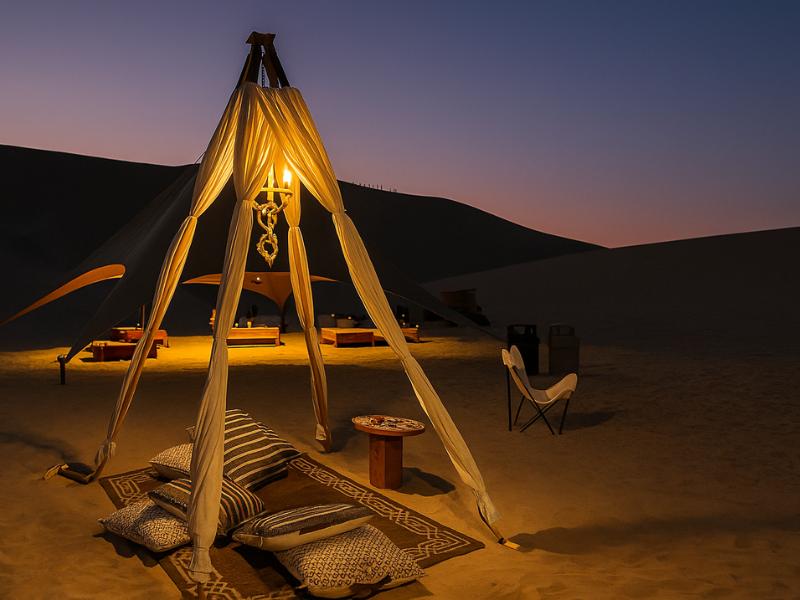
Accommodation types: Properties around the single lagoon range from backpacker hostels with dorm beds and party atmosphere through mid-range hotels featuring pools and lagoon views to upscale desert resorts offering the closest Peru comes to luxury oasis accommodations. The entire town contains perhaps 25-30 accommodation properties total, with the limited inventory meaning that distinct property tiers exist rather than the seamless quality gradient characterizing destinations with hundreds of hotel options. Most properties occupy the prime lagoon-front positions with only a handful set back from water requiring 2-3 minute walks to reach the oasis center.
Budget options: Hostels charge S/30-60 ($9-18) for dorm beds and basic private rooms, typically featuring shared bathrooms, minimal amenities, and the social atmosphere that some backpackers specifically seek while others actively avoid. Banana’s Adventure, Wild Olive, and Desert Nights represent established budget properties with decent reputations, though quality varies enough that recent online reviews prove more reliable than brand names for current conditions. Budget tier proves perfectly adequate for travelers viewing Huacachina as sleeping base between dune buggy tours rather than destination where accommodation quality significantly affects overall experience.
Mid-range: Hotels in the S/80-180 ($24-54) range deliver private bathrooms, swimming pools, lagoon or dune views, and generally comfortable though not luxurious conditions suitable for travelers wanting decent sleep and shower without paying resort premiums. Hotel Mossone, Huacachinero Hotel, and Desert Nights Hotel occupy this tier, with the pool amenity proving particularly valuable given Huacachina’s desert heat during summer months. Mid-range represents the sweet spot for most independent travelers balancing comfort with budget, delivering functional accommodation without the party hostel chaos or the resort costs that provide minimal additional value in this tiny town.
High-end: Resort properties charging S/250-400+ ($75-120) including Hotel El Huacachinero and some upper-tier rooms at established hotels provide the best lagoon views, newest facilities, largest pools, and most attentive service available in Huacachina though falling well short of genuine luxury standards that travelers encounter in Lima or Cusco. The premium pricing reflects scarcity rather than exceptional quality, with the limited high-end inventory allowing properties charging prices that overstate actual luxury delivery. Some travelers find the resort splurge worthwhile for the superior photo opportunities and relaxation quality, while budget-conscious visitors reasonably conclude that mid-range properties deliver 80% of the experience at 40% of the cost.
Location consideration: Every Huacachina property sits within easy 5-minute walk of the central lagoon and departure point for dune buggy tours, making location essentially irrelevant beyond the view premium that direct lagoon-front properties command. Properties advertise “lagoon view” or “dune view” to justify pricing, with lagoon-front positions costing 30-50% more than back-row alternatives delivering identical access to all activities and restaurants. The town’s tiny size means that even properties described as “remote” or “quiet” sit less than 300 meters from the oasis center, with walkability universal regardless of specific property selection.
| Accommodation Tier | Price Range | Typical Amenities | Location Quality | Booking Urgency | Overall Value |
|---|---|---|---|---|---|
| Hostel Dorms | S/30-45 ($9-13) | Shared bath, common areas, social | Mixed | Low shoulder, high peak | 8/10 – Budget |
| Budget Private | S/50-80 ($15-24) | Private bath, basic room | Back from lagoon typically | Moderate | 7/10 – Basic |
| Mid-Range | S/80-180 ($24-54) | Pool, private bath, decent comfort | Lagoon-adjacent | Moderate-High | 9/10 – Sweet spot |
| Upper Mid-Range | S/180-250 ($54-75) | Pool, lagoon view, newer facilities | Lagoon-front | High | 7/10 – Premium |
| Resort/High-End | S/250-400+ ($75-120+) | Best views, largest pools, service | Prime lagoon-front | Very High | 6/10 – Overpriced |
Dune Buggy And Sandboarding Tours – The Main Activity
Tour format: Two-hour sunset tours departing 4-5pm dominate Huacachina’s dune buggy market through the combination of dramatic golden-hour lighting, comfortable temperatures after afternoon heat peaks, and the spectacle of watching sunset from high dune ridges that sunrise tours deliver in reverse with considerably colder predawn conditions. Sunrise tours departing 5-6am attract photographers wanting different lighting angles and visitors who already completed sunset tours wanting additional sandboarding practice, though the 5am wake-up call eliminates most casual participants. Private tours allow custom departure timing, extended duration, and group-only buggies at substantial premium pricing that solo travelers and couples rarely justify while groups of 4-6 find per-person costs approaching standard tour rates.
What’s included: Standard tours provide dune buggy transportation driven by guide, sandboards and sitting sleds for all participants, basic safety briefing covering proper boarding technique and buggy holding positions, and stops at 3-4 different dune locations offering varied sandboarding slopes and photo opportunities. The equipment quality varies between operators with boards ranging from properly waxed fast-sliding alternatives to old dried-out boards that barely move down slopes, making operator selection genuinely important rather than treating all S/35-50 tours as equivalent. Guides handle all driving with no passenger driving permitted, stop at predetermined photo viewpoints, and manage the group timing to reach prime sunset viewing positions around 6-6:30pm depending on season.
Cost reality: Standard group tours run S/35-50 ($10-15) per person with street tout pricing at S/35 representing the bottom tier while hotel bookings reach S/45-50 reflecting commission structures rather than superior service. Private tours charge S/250-400 ($75-120) for the entire buggy regardless of passenger count, making the math work for groups of 6+ reaching per-person costs approaching standard tours while solo travelers and couples pay 5-8x more for the private experience. The tour cost represents excellent value given the 2-hour duration, equipment provision, and genuinely thrilling dune buggy driving that would cost considerably more in North American or European desert destinations.
Safety considerations: Established operators maintain properly maintained buggies, provide functional seatbelts, drive at speeds balancing excitement with reasonable risk management, and carry insurance covering participant injuries during normal operation. Street touts occasionally represent questionable operators using older poorly maintained buggies, skipping safety briefings, and driving recklessly to create thrills that cross from exciting into genuinely dangerous. Book through hotel recommendations or established operators with physical offices around the lagoon rather than the cheapest street tout offer, as the S/5-10 savings proves meaningless if equipment failure or driver recklessness creates injuries that medical treatment costs dwarf tour savings.
Sandboarding difficulty: Standing sandboarding requires decent balance and board control similar to snowboarding though with softer landing consequences, with most first-timers falling repeatedly before completing runs successfully if they attempt standing at all. Sitting position using plastic sleds enables everyone regardless of age or athletic ability to slide down dunes successfully, creating the accessible option that ensures all participants enjoy at least some successful runs during tours. Guides encourage trying standing though never pressure participants who prefer sitting throughout, with roughly 60-70% of tour groups containing at least one person who attempts standing while 30-40% stick exclusively to sitting sleds that prove genuinely fun rather than merely fallback options.
Trying to choose how to spend your time on the dunes? This comparison of sandboarding vs dune buggy in Huacachina tours helps you decide based on your energy level and travel style.
| Tour Type | Departure Time | Duration | Cost Per Person | Group Size | Crowds | Experience Quality |
|---|---|---|---|---|---|---|
| Sunset Group | 4-5pm | 2 hours | S/35-50 ($10-15) | 10-16 people | High peak season | 9/10 – Best value |
| Sunrise Group | 5-6am | 2 hours | S/35-50 ($10-15) | 6-12 people | Lower | 8/10 – Cold, fewer crowds |
| Private Sunset | Flexible | 2-3 hours | S/250-400 ($75-120) total | Your group only | None | 9/10 – Personalized |
| Private Sunrise | Flexible | 2-3 hours | S/250-400 total | Your group only | None | 8/10 – Cold but private |
Practical Logistics And What To Bring
Money: ATMs in Huacachina prove limited and unreliable with the single functioning machine frequently running out of cash during peak season weekends, making advance cash withdrawal in Ica or Lima genuinely important rather than paranoid over-preparation. Most hotels, restaurants, and tour operators accept Visa and Mastercard though small vendors and street touts require cash exclusively, with S/200-300 ($60-90) in small bills covering 1-2 night stays including tours, meals, and incidentals for most travelers. The nearest reliable ATM sits in Ica requiring taxi trip if Huacachina’s machine proves empty, with this 20-minute round-trip inconvenience easily avoided through proper advance cash planning.
Phone/WiFi: Mobile coverage from major Peruvian carriers including Claro and Movistar works adequately throughout the oasis town and surprisingly extends partway up surrounding dunes, with 4G speeds sufficient for messaging, maps, and social media though not streaming video reliably. Hotel WiFi quality varies dramatically from functional to frustratingly slow, with mid-range and resort properties generally maintaining better connections than budget hostels where multiple guests competing for limited bandwidth creates unusable speeds during evening hours. Travelers requiring consistent connectivity for work should confirm WiFi quality with specific properties before booking rather than assuming desert oasis town maintains Lima-quality internet infrastructure.
What to pack: High-SPF sunscreen, quality sunglasses, closed-toe shoes for sandboarding preventing sand burn injuries that sandals allow, light layers for evening temperatures that drop 10-15°C from afternoon peaks, and camera or phone with adequate storage for the genuinely photogenic dune landscapes covering every direction. Lightweight long pants and long-sleeve shirt prove valuable for sandboarding as falls on sand create abrasion injuries that shorts and t-shirts don’t prevent, with many experienced visitors describing clothing choices as the difference between enjoying tours and spending the evening treating scraped knees and elbows. Bring minimal luggage as Huacachina accommodation rooms typically lack the space characterizing hotels in larger cities.
Food and dining: Ten to fifteen restaurants circle the lagoon offering identical menus of pizza, pasta, Peruvian classics, and tourist-oriented international dishes at moderate prices of S/25-45 ($7.50-13) for main courses. Quality varies from acceptable to mediocre with none achieving genuinely impressive culinary standards, making dining more about convenient refueling than destination-worthy meals that warrant planning around. Hotels typically operate attached restaurants with breakfast sometimes included in room rates, while several cafes provide coffee and light breakfast options for guests whose accommodations lack food service. The limited variety means multi-night visitors repeat restaurants or eat hotel meals rather than discovering new options daily.
Safety: Petty theft from beach areas around the lagoon where visitors leave bags unattended during swimming creates the primary security concern, with locked hotel rooms and carried valuables during dune tours essentially eliminating theft risk outside these specific circumstances. The town feels genuinely safe for evening walking with well-lit lagoon perimeter and regular foot traffic until 10-11pm when most visitors retire, though solo travelers should exercise normal nighttime awareness rather than treating tiny town size as immunity from all urban caution. Scams prove minimal beyond occasional overpricing from street vendors, with the small community and tourism-dependent economy creating incentives for honest business practices that larger cities sometimes lack.
We’ve answered the question are Huacachina tours safe with details on operator standards, equipment quality, and what red flags to watch out for when booking.
Health: Sea-level altitude eliminates the acclimatization concerns affecting Cusco and other highland Peru destinations, making Huacachina accessible immediately after Lima arrival without altitude sickness risk that other Peru highlights require planning around. Sun exposure during afternoon hours creates the primary health concern with intense desert UV causing burns faster than most visitors expect, particularly during dune buggy tours where wind creates cooling sensation masking developing sunburn until post-tour examination reveals damage. Tap water proves non-potable requiring bottled water for drinking, with most hotels providing complimentary bottles and restaurants selling water at reasonable prices making hydration straightforward.
Need a packing checklist for the desert? Our guide on what to wear in Huacachina tours covers everything from sun protection to footwear that won’t fill up with sand.
Day Trip Vs Overnight – Making The Decision
Day trip reality: Technical possibility exists for reaching Huacachina from Lima, spending 2-3 hours at the oasis, and returning the same day, though this format completely misses sunset dune buggy tours departing 4-5pm that represent the destination’s primary attraction and creates 10+ hour travel days for minimal actual destination time. Day trips from Paracas taking 90 minutes each direction prove more reasonable though still rushed, covering lunch, oasis walk, swimming, and photos before late afternoon departure missing the sunset tours that most overnight visitors specifically plan around. The day trip format makes sense only when Huacachina serves as brief photo stop rather than activity destination.
Day trip from where works: Visitors staying in Ica city 10 minutes away can day-trip Huacachina comfortably, spending morning or afternoon at the oasis before returning to Ica’s superior dining and accommodation value that makes it logical base for some travelers. Paracas visitors can complete morning Ballestas Islands tours and afternoon Huacachina visits in single days, though this rushed format suits travelers prioritizing destination quantity over depth. Lima-based day trips prove genuinely inadvisable with the transportation time consuming most of the day, with visitors attempting this format consistently reporting that minimal oasis time failed justifying the effort required reaching it.
Why overnight recommended: Sunset dune buggy tours departing 4-5pm represent Huacachina’s raison d’être with the dramatic lighting, cooling temperatures, and high-dune sunset viewing creating the experience that distinguishes oasis visits from mere photo stops at scenic locations. Day-trippers arriving from Lima or Paracas face departure timing that precludes sunset tour participation entirely, fundamentally missing the activity their Huacachina visit was presumably meant to capture. Overnight stays enable the relaxed timing that watching sunset from dune peaks requires, eliminate the rushed feeling that day trips create, and allow evening oasis atmosphere that daytime-only visitors never experience.
Cost comparison: Day trips save S/80-180 ($24-54) accommodation costs though incur return transportation expenses that overnight visitors booking one-way tickets avoid, with the net savings reaching perhaps S/50-100 ($15-30) when comparing identical transportation quality levels. The modest savings prove difficult justifying against the experience quality difference, with overnight visitors accessing sunset tours, relaxed oasis time, and full destination experience that day-trippers miss entirely while saving equivalent to one nice restaurant meal in Lima. Multi-night stays show diminishing returns with the second night adding cost without proportionally more experience, making the single-night format the value sweet spot.
Experience quality: Overnight visitors consistently describe Huacachina positively while rushed day-trippers report wondering whether the destination justified the effort, with the difference attributable entirely to sunset tour access and relaxed pacing rather than any inherent oasis quality differences. The evening desert atmosphere as temperatures cool, lights illuminate lagoon-front restaurants, and overnight guests settle into relaxed post-tour dining creates ambiance that daytime-only visitors never witness. Proper Huacachina visits require overnight timing that enables sunset participation, with day trips representing compromised versions that save modest money while substantially reducing satisfaction.
Canadian couple stayed two Huacachina nights describing sunset dune buggy tour as trip highlight and oasis evening as surprisingly charming, while Americans they met who day-tripped from Lima spent 11 hours traveling for 90 minutes actual oasis time, missed sunset tours entirely, and told them “I wish we’d known to stay overnight like you did because this felt like wasted day.”
FAQ: Huacachina Visit Questions
1. How do I get to Huacachina from Lima?
Take a 4-5 hour bus from Lima to Ica (S/40-80), then 10-minute taxi to Huacachina (S/10-15). Cruz del Sur, Oltursa, and Soyuz operate multiple daily departures, with no direct buses to Huacachina itself requiring the Ica connection. Our dedicated guide to getting to Huacachina from Lima compares that public-bus route against Peru Hop (check prices here), a private transfer and a full-day guided tour.
2. Is Huacachina worth visiting or just a photo stop?
Worth visiting for overnight stays enabling sunset dune buggy tours and sandboarding, the destination’s primary activities. Day trips function as photo stops only, missing the sunset tours departing 4-5pm that create the experience justifying the journey.
3. How many days should I spend in Huacachina?
One to two nights optimal, with single nights covering sunset dune buggy tour and essential oasis experience efficiently. Two nights add optional sunrise tours and relaxed pacing without adding substantially more activities in this tiny town.
4. Can I visit Huacachina as a day trip from Lima?
Technically possible but genuinely inadvisable with 10+ hour round-trip transportation for 2-3 hours oasis time, missing sunset dune buggy tours entirely. Day trips from Paracas (1.5 hours) or Ica (10 minutes) prove more reasonable though still rushed.
5. Is it safe to visit Huacachina?
Generally safe with petty theft from unattended lagoon beach bags the primary concern. The small tourism-dependent town feels secure for walking, with proper valuables management and normal nighttime awareness eliminating most risk scenarios.
6. What’s the best time of year to visit Huacachina?
April-November dry season delivers best conditions with clear skies ensuring spectacular sunsets, while May and September-November provide excellent weather with fewer crowds. Avoid December-February when coastal fog occasionally reduces visibility unpredictably.
7. Are dune buggy tours safe in Huacachina?
Safe with established operators maintaining proper equipment and driving responsibly, though street tout operators sometimes use poorly maintained buggies. Book through hotel recommendations or operators with physical offices rather than cheapest street offers for proper safety standards.
8. Can I swim in the Huacachina lagoon?
Swimming allowed though water quality varies seasonally with algae levels and maintenance affecting cleanliness unpredictably. Most visitors swim briefly for the experience or photos rather than treating it as primary activity, with hotel pools providing preferable swimming conditions.
Glossary: Huacachina Visit Terms
Oasis Town: Desert settlement built around natural lagoon surrounded by towering sand dunes, with Huacachina representing Peru’s most famous oasis and one of South America’s few permanent desert water sources. The entire town circles a single lagoon walkable in 15 minutes with approximately 100 permanent residents.
Dune Buggy / Sandboarding Tour: Combined activity involving high-speed dune buggy transport driven by guide across desert landscape with stops at various dunes for downhill sandboarding either standing or sitting. Standard 2-hour sunset tours departing 4-5pm represent Huacachina’s primary tourist activity.
Ica Connection: Necessary 10-kilometer taxi journey connecting Ica city bus terminal to Huacachina oasis, costing S/10-15 and taking 10 minutes. All long-distance buses terminate in Ica requiring this connection regardless of origin city due to Huacachina’s tiny size.
Laguna de Huacachina: The natural desert lagoon at town center surrounded by palm trees and hotels creating the iconic oasis imagery. Swimming allowed though water quality variable, with lagoon functioning primarily as scenic centerpiece rather than recreational water body.
Desert Resort: Accommodation category describing Huacachina’s upper-tier properties charging S/250-400+ with lagoon-front positions, pools, and best available amenities. Quality falls below international luxury standards despite premium pricing reflecting limited high-end inventory rather than exceptional service delivery.
Cruz del Sur / Peru Bus Companies: Major intercity bus operators connecting Lima to Ica with Cruz del Sur representing premium option (S/70-80), while Oltursa, Soyuz, and Peru Bus provide mid-range and budget alternatives. All companies reach Ica safely with differences primarily in seat comfort and amenities.
Mototaxi: Three-wheeled motorized vehicle providing cheaper Ica-Huacachina transportation (S/8-10) versus standard taxis (S/10-15). Less comfortable than taxis though perfectly functional for the 10-minute journey with secure luggage storage.
Pisco Route: Tourism circuit combining Paracas National Reserve, Ballestas Islands, Huacachina oasis, and Nazca Lines across 2-4 days. Represents Peru’s most popular coastal itinerary with independent travelers easily replicating organized tour routing at 50-60% cost through public transportation.
Ready To Visit Huacachina Oasis?
Bus from Lima to Ica, taxi connection to Huacachina, overnight stay enabling sunset dune buggy tour participation – this practical approach delivers the essential oasis experience that day trips miss entirely. The tiny town offers focused desert activities rather than multi-day exploration, with 1-2 nights capturing everything Huacachina provides before onward travel to Nazca, Paracas, or back to Lima.
Book dune buggy tours and accommodation at huacachina.tours where we’ve operated sunset departures for years and understand exactly what makes Huacachina visits successful versus disappointing – proper overnight timing, reliable operators, and realistic expectations about what this tiny desert oasis actually delivers.
From the guides at Huacachina Tours who watch day-trippers racing against sunset departure deadlines while overnight visitors relax into the evening desert atmosphere that makes this oasis worth visiting rather than merely photographing – the difference comes down entirely to staying through sunset rather than leaving before it.
Choose Your Huacachina Outing
Have a travel date in mind? Check your two-hour buggy and sandboarding before arranging the rest of your trip.
A local Huacachina loop with a driver, basic boards and a sunset stop. Meet at Arenas Bar & Lounge and return there; admission is extra. English is listed. Published booking age bands start at 11.
General recommendation. Confirm your party's eligibility and arrangements with the provider.
Where Will Your Activity Start?
English is listed for these products. Time estimates exclude separate transfers and check-in. Child ages are booking bands, not a safety assessment. The specialist recommendation is limited to age 70 pending provider confirmation because listings differ.
| Outing | Duration | What You Get And What To Confirm |
|---|---|---|
| Two-Hour Buggy And Sandboarding | 2 hours | A local Huacachina loop with a driver, basic boards and a sunset stop. Meet at Arenas Bar & Lounge and return there; admission is extra. English is listed. Published booking age bands start at 11. |
| Four-Hour Sandboard And Sandski Experience | 4 hours | A specialist Huacachina outing with instruction, board or ski equipment, protective equipment, buggy transport and sunset. English is listed. Pickup must be coordinated; the local meeting point is also available. Published booking age bands start at 6. Not recommended during pregnancy or with back or cardiovascular conditions. |
| Lima, Paracas And Huacachina Day Trip | 18 hours | An 18-hour return trip from Lima with English or Spanish guiding, Paracas and a vineyard visit. Buggy, sandboarding, local taxes and sunset toast are included only in the Premium option; pickup depends on the option. Meals are extra. Not suitable under age 7, during pregnancy or with mobility impairments. |
Choose a date to see scheduled departures. Availability and final price are confirmed on Viator.
Check Your Huacachina Buggy Date